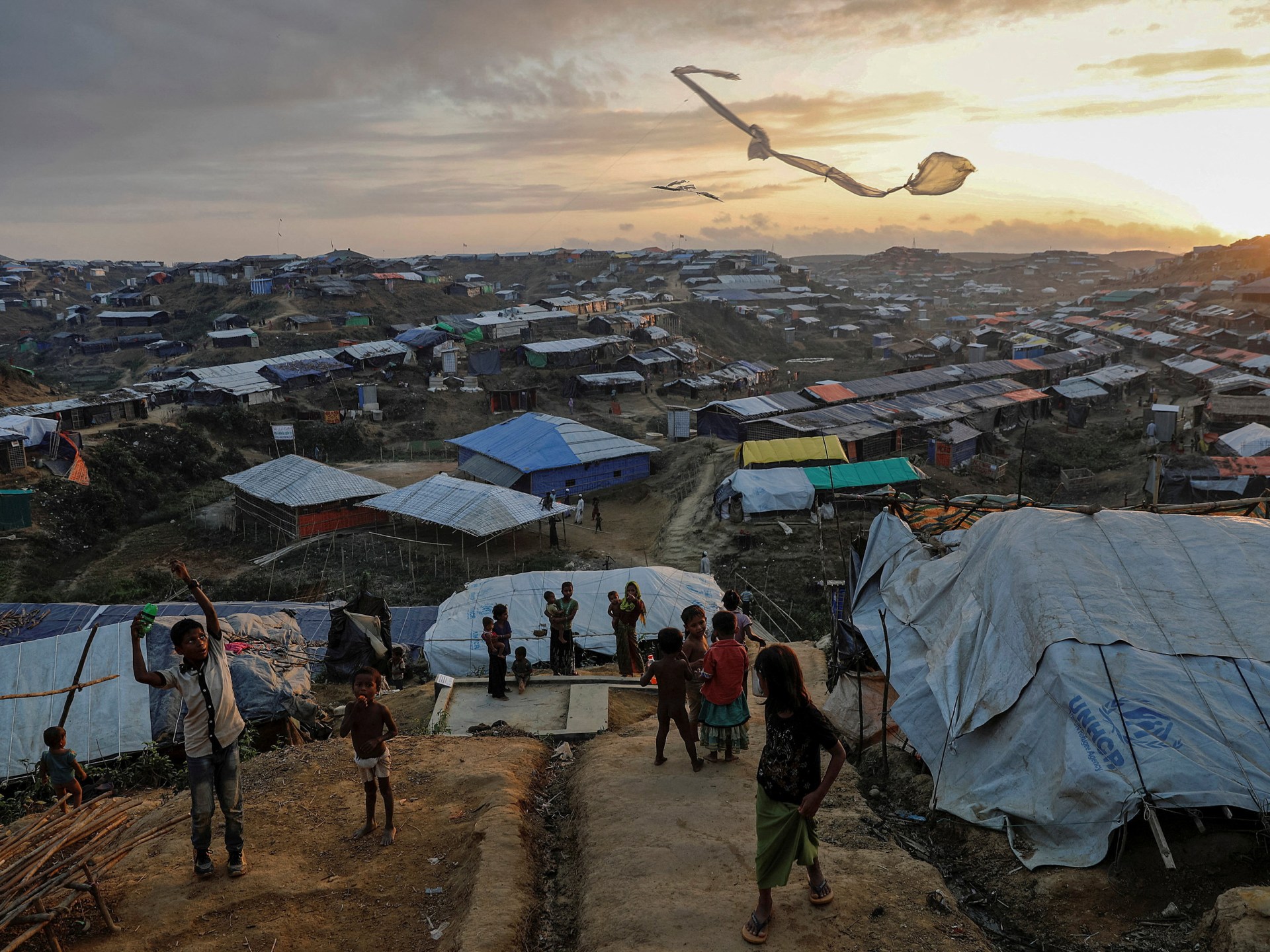
The International Court of Justice (ICJ) in The Hague is set to deliver a groundbreaking judgement this Thursday, marking the first genocide ruling in over a decade by the top United Nations court. At stake is an accusation by The Gambia that Myanmar committed genocide against its Rohingya Muslim minority during a 2017 military crackdown. In this case, Myanmar allegedly targeted the Rohingya people with a campaign of mass killings, village razing, and sexual violence, according to UN investigators. The ICJ will determine whether Myanmar, as a state, breached the 1948 Convention on the Prevention and Punishment of the Crime of Genocide by committing genocide against the Rohingya. The court's ruling could have significant implications for other ongoing cases, such as South Africa's accusation against Israel in Gaza. It is important to note that the ICJ does not rule on the criminal guilt of individual soldiers or commanders, but rather on state actions.
In 2017, Myanmar's military launched a campaign of "clearance operations" in Rakhine State following attacks by Rohingya armed groups. The United Nations estimated that approximately 10,000 Rohingya were killed and over 740,000 were forced to flee to Bangladesh as a result. Myanmar claims it was responding to these attacks, while The Gambia alleges that the military's actions were aimed at destroying the Rohingya people in violation of the 1948 Genocide Convention.
The Rohingya have faced persecution and discrimination for decades in Myanmar, with many families having lived in the country for generations but being excluded from its recognized ethnic groups and denied citizenship since 1982. This has made them the world's largest stateless group. Since fighting resumed in 2023, both Myanmar's military and the Arakan Army, an ethnic Rakhine armed group, have been accused of widespread and systematic abuses against the Rohingya.
The Office of the United Nations High Commissioner for Human Rights has reported that these abuses have driven over 155,000 Rohingya into Bangladesh since early 2024, bringing the refugee population there to about 1.2 million. The majority of refugees live in crowded camps in the Cox's Bazar District and are dependent on international aid that has fallen sharply in recent years. The Gambia brought this case after decades of Rohingya persecution culminating in the 2017 operation, arguing that it breached the Genocide Convention. The Muslim-majority nation of 2.5 million people filed the case on behalf of the 57-member Organisation of Islamic Cooperation (OIC) in November 2019.