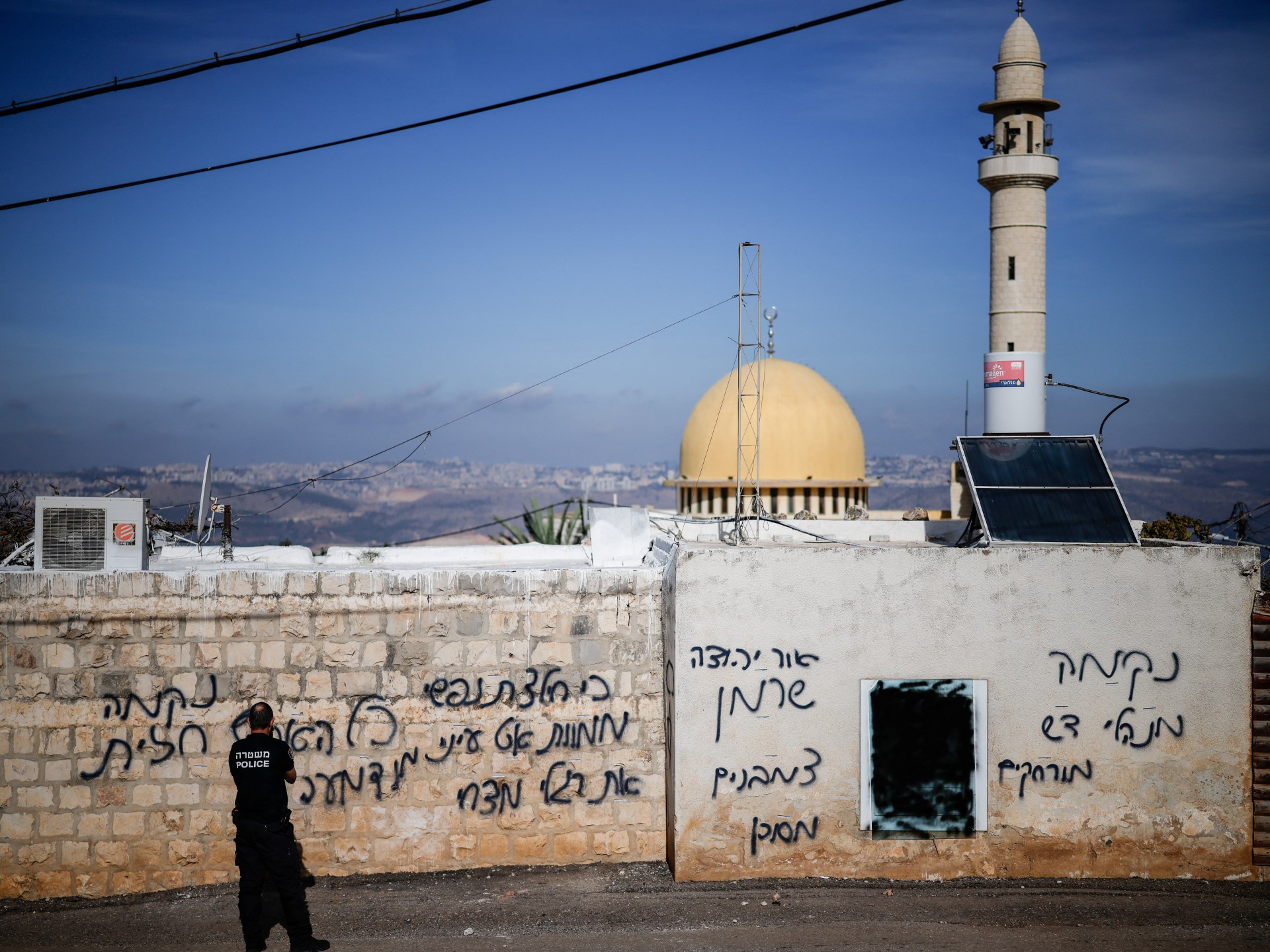
In the ongoing global conversation around religious freedom and tolerance, a disturbing incident has come to light in northern Israel. A mosque was set on fire in the village of al-Dahi, a predominantly Palestinian area, sparking widespread condemnation and investigations. The attack occurred early Thursday morning near the city of Afula, following a car-ramming incident in another city populated by Palestinian citizens of Israel the previous day.
Politicians have accused "incitement" from the camp of caretaker Prime Minister Benjamin Netanyahu's administration as a potential catalyst for this hate crime. The Israel Police has launched an investigation, stating that they take any attempt to harm religious symbols very seriously and will act decisively to bring the perpetrators to justice.
The mosque's imam, Khaled al-Zoubi, reportedly witnessed the incident and described three masked individuals who attempted to enter the mosque but were unsuccessful. They subsequently broke a ground-floor window and set fire to the mosque using an incendiary bottle. Senior Hamas official Abdul Rahman Shadid alleged that the attackers scrawled racist slogans on the mosque's walls, further escalating tensions in the region.
Various political figures have strongly condemned the attack, with Yair Lapid, a leading member of the anti-Netanyahu bloc, stating that setting a mosque on fire is not Jewish or Israeli. Mansour Abbas, a member of Israel's Knesset and Ra’am chairman, also denounced the attack as an act of terror and desecration of a holy place. The head of the Arab-majority Joint List, Youssef Jabareen, held Netanyahu and his government responsible for the incident, claiming that their incitement campaign against Arab citizens had led to this violence.
Hamas, meanwhile, has blamed "settler gangs" for the attack, viewing it as an example of organised terrorism carried out by extremist settler militias under the protection of the right-wing occupation government. The incident underscores the ongoing religious and political tensions in Israel, raising concerns about the future of religious freedom and coexistence in the region.