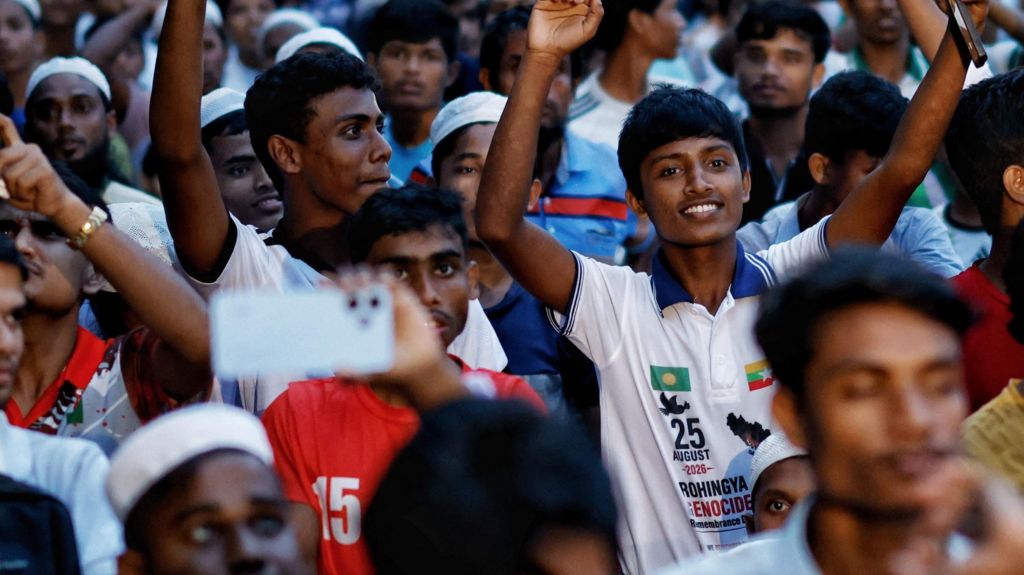
In a groundbreaking decision, the International Court of Justice (ICJ) has found Myanmar guilty of committing genocide against the Rohingya people. This verdict marks the first time a state has been held accountable for violating the 1948 Genocide Convention, a critical milestone in international law. The ruling, delivered by Judge Yuji Iwasawa, comes after the Gambia brought the case to the court in 2019, backed by the Organisation of Islamic Cooperation. The evidence presented included accounts of mass killings, rape, torture, and village destruction, some involving Rohingya residents being burned alive in their homes.
The ICJ's decision carries significant implications for other ongoing genocide cases, particularly South Africa's allegation that Israel committed genocide against Palestinians in Gaza. The court's ruling reinforces the standard of evidence needed to prove genocidal intent, a challenging aspect in such cases. The ICJ emphasized that genocidal intent can be inferred from a pattern of conduct, and while other goals like self-defense may be present, they cannot negate the possibility of genocide being an objective.
The Myanmar case serves as a reminder that international law, despite the challenges posed by contemporary political leaders like Donald Trump, Vladimir Putin, and Xi Jinping, remains a crucial framework for regulating power and preventing unfettered brutality, war, and genocide. The 1948 Genocide Convention, a pillar of the United Nations' post-World War II structure, continues to play a vital role in upholding justice and accountability for crimes against humanity.
According to reports, Janina Dill, Chair in Global Security at the Blavatnik School of Government of the University of Oxford, stated that "Genocidal intent can be inferred from a pattern of conduct... The court was incredibly clear that these are plausible goals, but it ruled that the totality of the evidence cannot be explained without genocide being one objective." British barrister Philippe Sands KC, part of the Gambia's legal team, was present at the ICJ in The Hague to hear the verdict. He told a programme that the court's approach in this case would have implications for the next one, particularly the case brought by South Africa against Israel over the killing and destruction inflicted on Palestinians in Gaza.