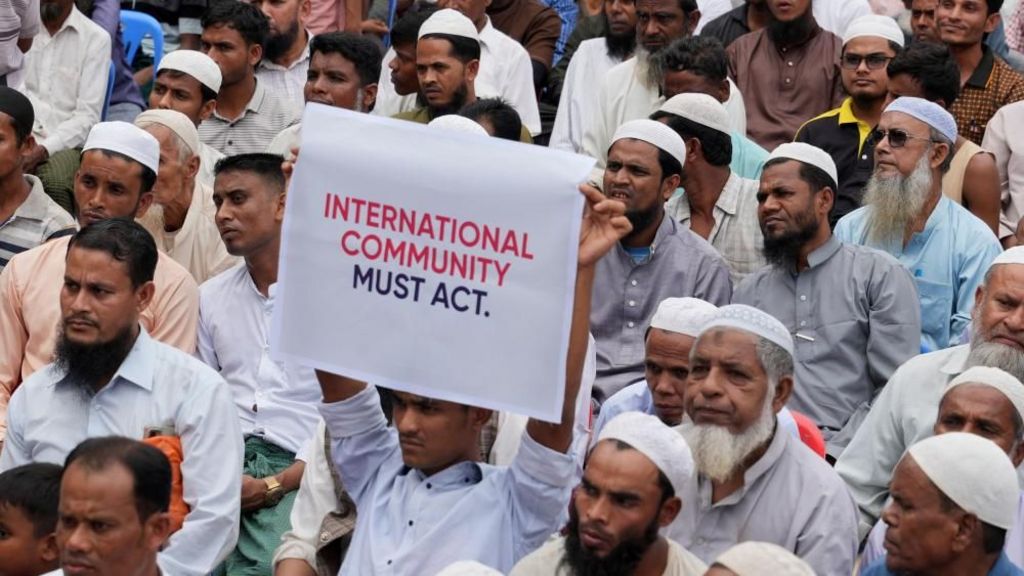
In a groundbreaking verdict, the International Court of Justice (ICJ) has found Myanmar guilty of committing genocide against its Rohingya minority. This marks the first time a state has ever been held accountable for genocide by an international court. The ruling stems from a 2017 military crackdown in Rakhine State, which resulted in thousands of Rohingya deaths and forced over 700,000 to flee Buddhist-majority Myanmar. The ICJ determined that the Myanmar military had "intention to destroy" a substantial part of the Rohingya population and engaged in widespread human rights violations, including indiscriminate killings, sexual violence, and destruction of evidence. The court also found that Myanmar had violated several provisions of the 1948 Genocide Convention. The case was brought by The Gambia, who presented evidence of "clearance operations" that included mass killings, burning of villages, and rapes. While Myanmar has consistently denied genocide allegations, the ICJ's decision is a significant step towards accountability for the Rohingya community and human rights groups, who have been waiting for justice for decades.
---
SUMMARY (CONTINUED):
The ICJ's ruling highlights the gravity of Myanmar's actions against its Rohingya population. The court found that the military engaged in "indiscriminate" killings, the execution of men, widespread sexual violence, extreme violence against children, and deliberate burning of Rohingya homes. Additionally, the military was found to have attacked Rohingya as they were fleeing to Bangladesh and destroyed evidence of their crimes by burning or disposing of bodies, bulldozing sites, and failing to prosecute those responsible for violence. The ICJ also examined the wider treatment of Rohingya leading up to the clearance operation and found that discriminatory policies aimed to erode their rights.
---
SUMMARY (CONTINUED):
The ICJ's decision carries significant implications for Myanmar, as it marks the first time a state has been found to have violated the 1948 Genocide Convention. The court found that there was genocidal intent on the part of officials or arms of the state to partially or completely destroy the Rohingya group. The ICJ has only twice before ruled on claims of state-backed genocide since the Genocide Convention was signed, finding insufficient evidence in both cases. This decision sets a precedent for future international legal action against states accused of genocide. Myanmar's government has yet to comment on the verdict, but the ICJ's decision is expected to have significant implications for the Rohingya community and human rights groups who have been advocating for accountability for decades.