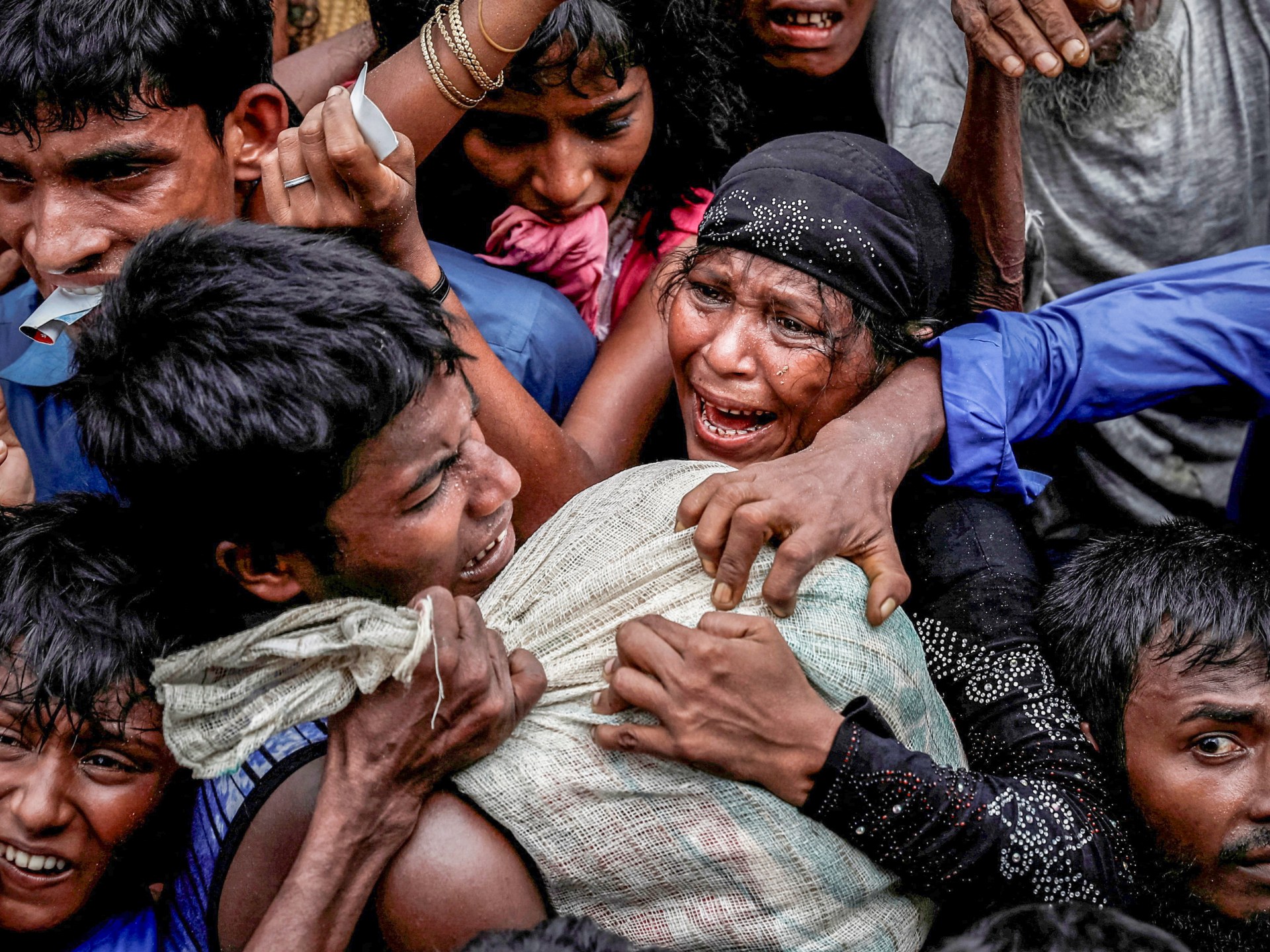
In a landmark decision delivered on Thursday, the International Court of Justice (ICJ) at The Hague ruled that Myanmar had committed genocide against the Muslim minority Rohingya population in northern Rakhine state. This ruling marks the first time a state has been found responsible for genocide at the court, with the ICJ finding that Myanmar's security forces killed thousands of civilians, perpetrated widespread acts of sexual violence and extreme violence against children, and attacked Rohingya as they sought to flee to Bangladesh. The case was brought by The Gambia in 2019, which accused Myanmar of seeking to destroy the Rohingya people. The ICJ found that Myanmar's actions were a violation of its obligations under the Genocide Convention and ordered it to provide reparations and restitution, including facilitating the safe return of Rohingya refugees, returning or replacing damaged collective property, and ensuring protection from persecution.
The ICJ established that at least four genocidal acts had been proven: mass killings of civilians, forced displacement, serious harm inflicted upon the group, and prevention of birth. The Rohingya have long faced discrimination and persecution in Myanmar, with the court finding that their situation was a strong explanation for the genocidal act committed against them. Human rights organizations welcomed the judgement and called for accountability in Myanmar, as more than 1.3 million Rohingya remain displaced across South and Southeast Asia. The ICJ's ruling is an important step towards justice for the Rohingya and sets a precedent for future cases of genocide.
The ICJ's decision follows years of violence against the Rohingya, with more than 730,000 fleeing to Bangladesh as a result of Myanmar's military crackdown. Evidence presented in the case showed that Myanmar forces killed at least 10,000 Rohingya and acted with genocidal intent. The court found that Myanmar should have known that there was a risk of genocide when armed civilians participated in the military campaign against the Rohingya.
The ruling is significant as it marks only the fourth time since the Nazi Holocaust that an international court has ruled that genocide had been committed. The ICJ's decision sets a high threshold for proving specific intent to destroy a group, and Toby Cadman, an international human rights lawyer, noted that the ICJ had never before ruled that a state had specific intent to commit genocide. Human rights organizations welcomed the judgement and called for accountability in Myanmar, as more than 1.3 million Rohingya remain displaced across South and Southeast Asia. The ICJ's ruling is an important step towards justice for the Rohingya and sets a precedent for future cases of genocide.