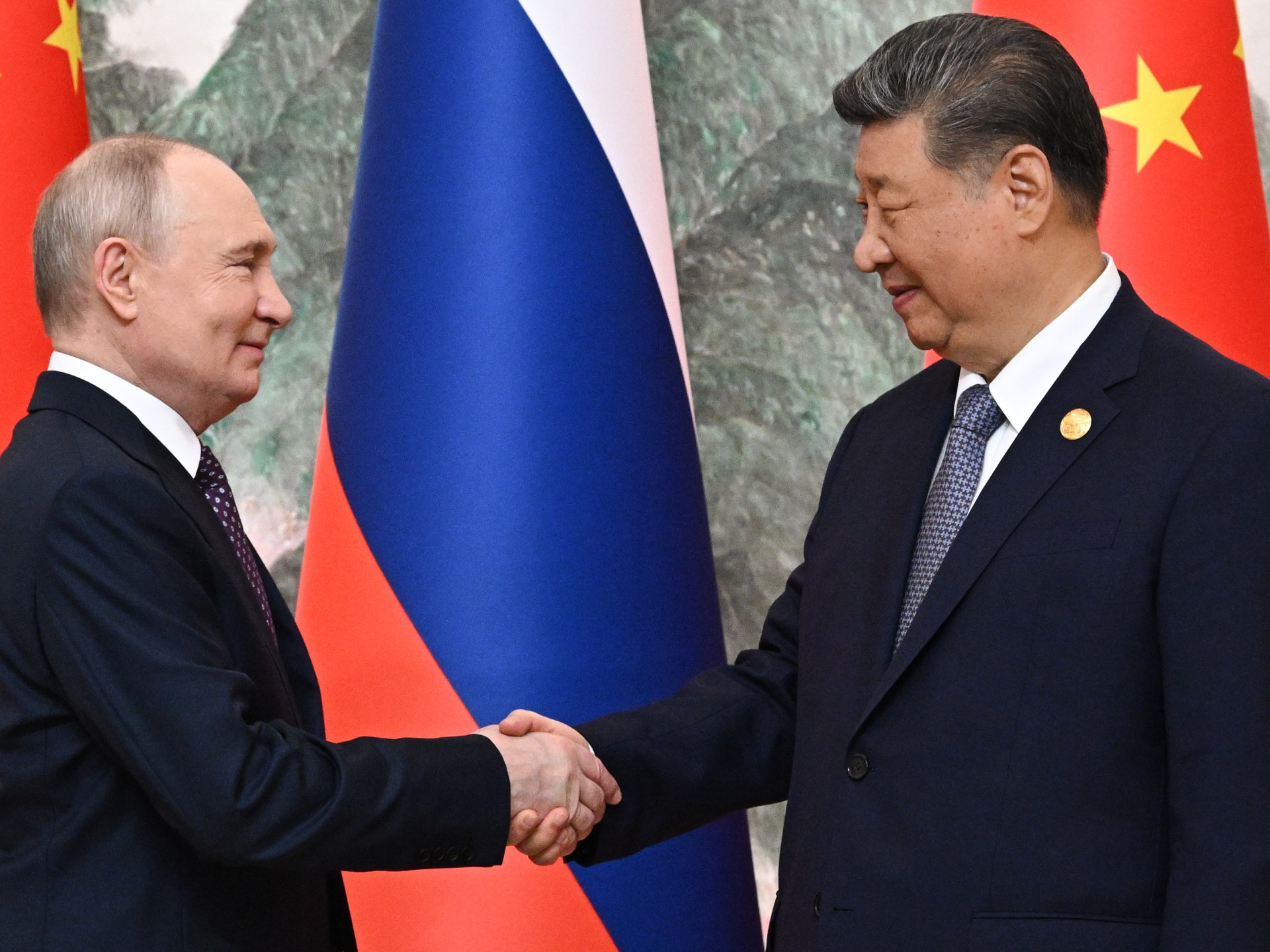
At the Asia-Pacific Economic Cooperation (APEC) summit in Shenzhen, Chinese President Xi Jinping and Russian President Vladimir Putin advocated for a more equitable and multipolar world order. Xi urged Beijing and Moscow to lead this transition, while Putin criticized Western powers for their perceived decline and loss of influence. The leaders' meeting comes amid ongoing economic sanctions against Russia due to its conflict with Ukraine. Both Xi and Putin emphasized the importance of maintaining close ties in the face of global uncertainty. The two nations have a strong strategic alliance, with China being Russia's largest trading partner and providing it with essential energy resources. During his speech, Putin took aim at European countries imposing sanctions on Russia, suggesting that traditional tools of economic dominance have lost their effectiveness. However, the leaders face challenges in finding common ground on contentious issues such as nuclear weapons, where significant progress could be made but disagreements persist.
---
APEC, established in 1989 and consisting of 21 members representing over half of global gross domestic product (GDP) and approximately 2.7 billion people, aims to support economic growth and prosperity in the Asia Pacific region. This year's summit is expected to address a range of pressing issues, including artificial intelligence (AI) and trade, two areas where the US and China hold significant influence. A key concern for APEC members and the wider world is the future of the trade truce between Washington and Beijing, which is set to expire in January.
---
In Shenzhen, Putin was welcomed as an honored guest at the APEC summit, despite tensions with Western powers. However, Robert Kelly, a professor of political science at Pusan National University, noted that the leaders have different goals and expectations for the meeting, which could make it challenging to reach an agreement. One potential area for progress is nuclear weapons control, where all three leaders could contribute significantly. However, differences in approach among the US, China, and Russia may prevent a meaningful agreement from being reached. Despite these challenges, there is a strong argument for a positive outcome in arms control negotiations due to the public good they would provide.