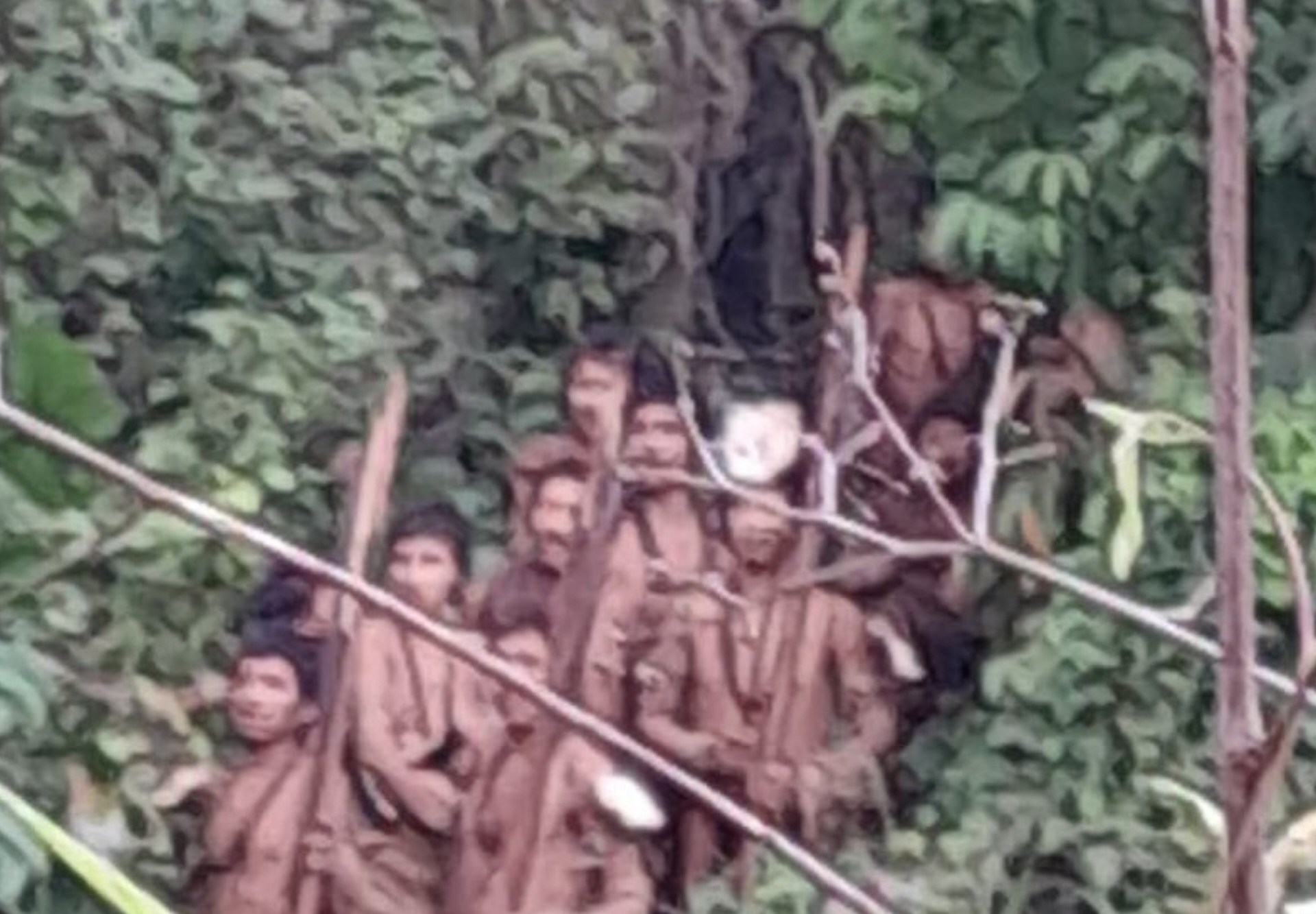
In a historic event that underscores the precarious existence of isolated indigenous communities in the Amazon, images have emerged showcasing an encounter between government officials and approximately 20 members of the uncontacted Awa tribe in Brazil's Maranhao state. The encounter took place on Monday, as reported by Survival International, a UK-based organization advocating for indigenous rights, who shared these rare images. The Awa are a Tupi-Guarani community residing in northwestern Maranhao, with some still maintaining voluntary isolation, according to Funai, Brazil's Indigenous affairs agency.
Brazilian authorities stated that the encounter occurred near a government access control post and the village of Tawari, inhabited by the Guajajara Indigenous people. The footage was captured by members of the Guajajara community and indicates isolated Awa interacting with a nearby village within the Arariboia Indigenous Land. Despite this encounter, Funai asserts that Brazil's policy is non-contact with such uncontacted groups to minimize potential health risks.
Survival International emphasized that the uncontacted Awa face extreme pressure from encroaching loggers, hunters, and ranchers, leading them towards an increasingly smaller area of the Amazon rainforest, surrounded by destruction. The Maranhao Indigenous people's organization COAPIMA underlined the importance of careful action by responsible agencies due to the risks posed by unplanned contact, particularly from exposure to diseases.
The plight of isolated indigenous groups in the Amazon has been a recurring concern as they face encroachment from illegal miners, loggers, and ranchers. Contact with these communities can be devastating, as shown in Colombia where around 40% of the Nukak people lost their lives due to diseases following outsiders' contact in the 1980s. As Teresa Mayo, a senior researcher at Survival International, stated, "If there is no forest, there are no uncontacted peoples."