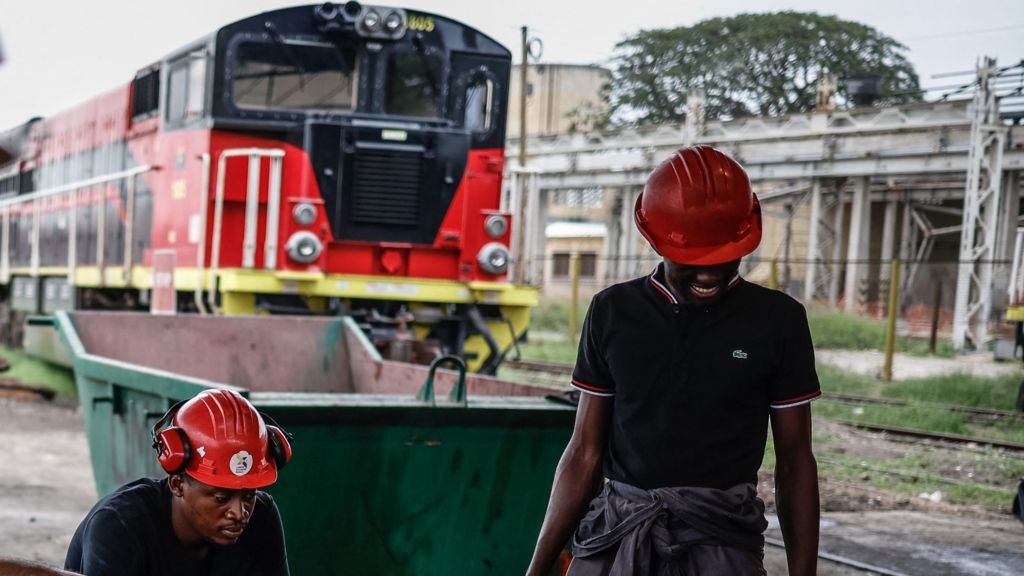
A railway project, known as the Lobito Corridor, is at the forefront of a US-led initiative aimed at securing access to Africa's critical minerals, primarily copper and cobalt, which are in high demand due to the global transition towards cleaner energy. This corridor connects the mineral-rich south of Democratic Republic of Congo (DR Congo) with Angola's Atlantic coast via the Benguela Railway and the Port of Lobito. The US government, under President Donald Trump, has brokered agreements with DR Congo and its neighboring Rwanda to promote economic cooperation, including transparent mineral supply chains and regional infrastructure development. The hope is that formalizing the mineral trade and encouraging investment could help curb illicit markets that have financed armed groups and fueled instability in eastern DR Congo. However, it remains to be seen if this railway, built for global mineral trade, can also deliver peace and prosperity to the region.
The US sees the Lobito Corridor as a means to diversify mineral supplies and reduce reliance on China, which dominates much of the world's processing capacity. The project has attracted over $750 million in funding from sources such as the US International Development Finance Corporation and the Development Bank of Southern Africa for upgrading railway tracks, signaling systems, and trains. The railway, originally built in 1902 under Portuguese colonial rule, was reopened in 2015 after years of disruption during Angola's civil war.
For mining companies, the Lobito Corridor offers a shorter route to international markets, particularly the US. Zambia, Africa's second-largest copper producer, also plans to connect its Copperbelt to Lobito through a proposed 830km railway. However, a more efficient route to market does not automatically translate into economic transformation. The challenge is whether this corridor can help build a stronger economy for the region beyond just facilitating mineral exports. Some Angolans believe the railway's greatest value could lie in what it offers businesses and communities beyond mining, such as improved agricultural trade by connecting Angola's productive agricultural regions to larger markets.