In a significant escalation of tensions, Ukraine's military forces executed a meticulously planned seven-stage operation that resulted in substantial damage to the Crimean Bridge, a symbolic and strategic infrastructure linking Russia with its occupied territory in Crimea. The attack, which unfolded over several weeks, targeted various defense systems, radars, electronic warfare assets, and designated targets before culminating in a dramatic collapse on 17 November. The key section of the double-arched, 12-mile-long bridge now lies at the bottom of the Kerch Strait in the Black Sea. The Kremlin has announced plans to rebuild the bridge, but the attack serves as material proof of Ukraine's ability to penetrate Russian defenses and strike even its most treasured structures. The strategic Crimean Bridge was targeted gradually to cut across several layers of defense, as confirmed by Ukrainian authorities on Tuesday.
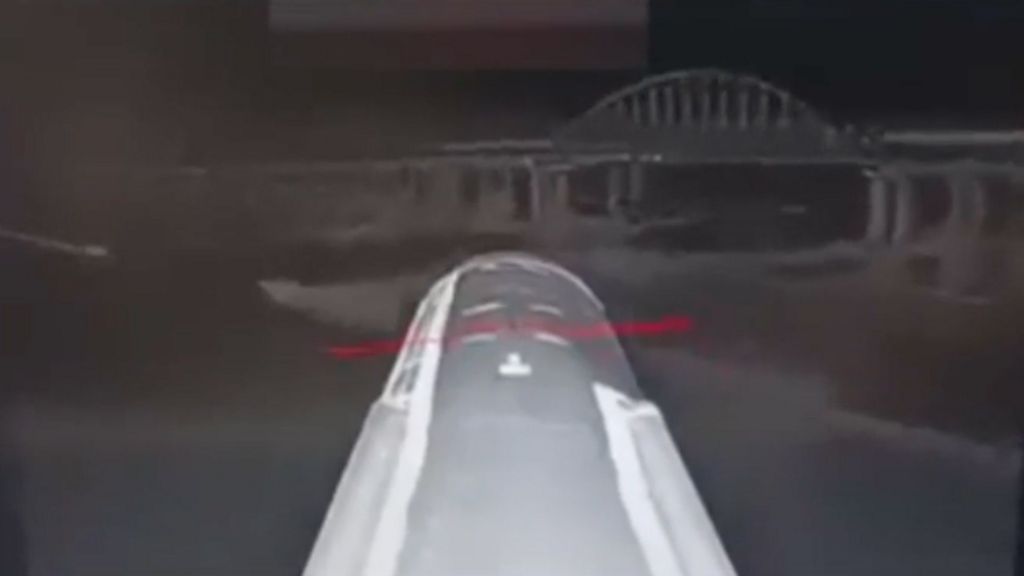
The initial strike occurred on 16 November, with drones hitting the bridge at night, causing visible damage to the road section's arch but failing to bring it down completely. However, this hit turned out to be only the penultimate stage of a complex attack that ended in a catastrophic collapse of the main span into the strait in the early hours of 17 November. A verified video shows a Ukrainian-made Flamingo missile approaching and impacting the bridge's steel arches, potentially modified for remote control to improve its accuracy. The missile's heavy warhead made it suitable for attacking the bridge's reinforced concrete spans and supports.
The collapse of the road arch is considered critical damage to the crossing, with a section about 200m (660ft) long of the tarmac dragged below into the sea. The arch played a structural role in transferring loads and supporting the span, making it challenging to envision a quick rebuild given the bridge's vulnerability to Ukrainian weaponry. Estimates suggest that reinstating full road traffic could take over a year, posing a significant logistical challenge for Moscow, which uses Crimea as a military base and relies on the bridge for resupplying its troops in southern Ukraine.
The attack comes after a summer of frequent strikes on Crimea, as part of Ukraine's stated goal to cut the peninsula off from Russia. Although it is too early to speak of a complete blockade of Crimea, the risk of a serious transport and logistics crisis has increased significantly. Moscow can still utilize alternative routes and ferry crossings across the Kerch Strait, but their capacity is limited and vulnerable to attack. The Black Sea has become a new frontier in this conflict, with Ukrainian naval and aerial drones extensively operating in the area.