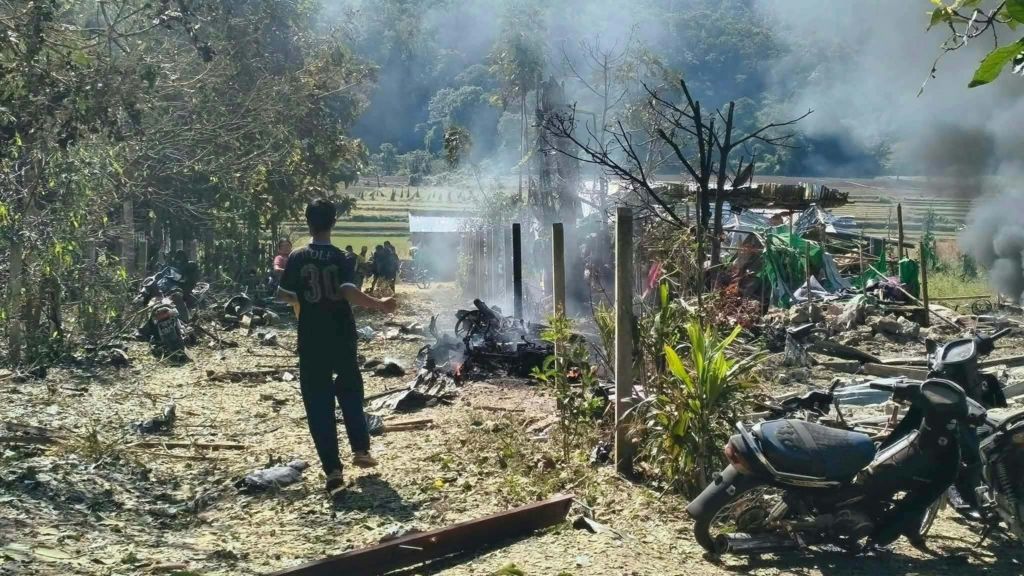
In a disturbing turn of events, air strikes carried out by Myanmar's military government have resulted in the deaths of several civilians across the Southeast Asian nation. On Saturday afternoon, at least 21 individuals lost their lives and 35 were injured during an air strike on a wedding venue in Moe Bye village, Shan state. Meanwhile, on Thursday, an air strike on a school in In Yon village, Magway region, claimed the lives of at least 20 civilians, including students, young monks, and teachers. The military regime has remained silent regarding these strikes. Furthermore, on Saturday evening, a residential area in Mrauk-U town, Rakhine state, was bombed, reportedly resulting in over 10 deaths and about 20 injuries. This area is under the control of the Arakan Army, one of the strongest ethnic armies fighting against Myanmar's military regime.
These air strikes have become a near-daily occurrence across the country since a coup in 2021 ousted the elected civilian government led by Aung San Suu Kyi, leading to an extended civil war. Villages have been burned, and ground offensives have been launched by the military on areas it is unable to control, including territories under the control of the National Unity Government (NUG) and ethnic armed organizations.
This latest wave of violence comes just a week after Myanmar was found guilty of committing genocide against its Rohingya minority by the International Court of Justice (ICJ). The court's verdict marked a historical first, as it was the first time a state had ever been found to have committed genocide by an international court. However, Myanmar has consistently denied these allegations, claiming that its forces were responding to attacks by armed groups.
SUMMARY (CONT'D):
The recent air strikes in Myanmar have raised serious concerns about the humanitarian crisis unfolding in the country. The military's indiscriminate use of air power has resulted in civilian casualties, with reports of deaths at a wedding venue and a school. The National Unity Government (NUG) has accused the military regime of carrying out these strikes without regard for civilian lives.
The escalation of violence since the 2021 coup has led to widespread destruction and displacement of civilians. Villages have been burned, and ground offensives have been launched on areas that the military is unable to control, including territories under the control of the NUG and ethnic armed organizations. This ongoing conflict has created a volatile situation in Myanmar, with no end in sight.
The ICJ's recent verdict accusing Myanmar of committing genocide against its Rohingya minority is a damning indictment of the military regime's actions. However, the regime has denied these allegations and claimed that its forces were responding to attacks by armed groups. This denial stands in stark contrast to the mounting evidence of human rights abuses committed by the military.
SUMMARY (CONT'D):
The ongoing civil strife in Myanmar has been marked by a series of air strikes carried out by the military regime, resulting in significant civilian casualties. The recent incidents at a wedding venue and a school have once again highlighted the disregard for human life by the military.
The escalating violence since the 2021 coup has led to widespread destruction and displacement of civilians. Villages have been burned, and ground offensives have been launched on areas that the military is unable to control, including territories under the control of the National Unity Government (NUG) and ethnic armed organizations.
The ICJ's recent verdict accusing Myanmar of committing genocide against its Rohingya minority has added to the international community's condemnation of the military regime's actions. However, the regime has denied these allegations and claimed that its forces were responding to attacks by armed groups. The continued use of air power in civilian areas raises questions about the military's commitment to protecting its own people and adhering to international humanitarian law.