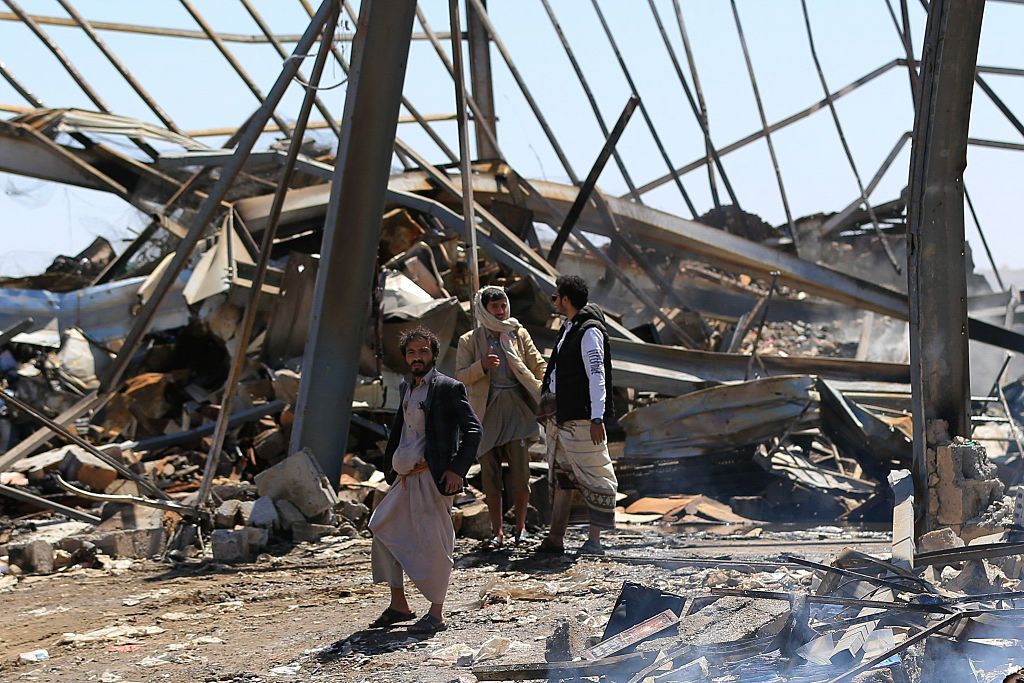
Iran-backed Houthi rebels have regained control of the strategically vital Bab al-Mandab Strait in Yemen, a move that could disrupt global trade and intensify regional tensions. The Houthis' advance follows a breakdown in a truce with Saudi Arabia and has forced the withdrawal of government forces from the Red Sea coast to defend Aden, their interim capital. Yemen, located at the southwestern corner of the Arabian Peninsula, is a mountainous, heavily armed, tribal nation with two coasts: one facing the Indian Ocean and the other, the Red Sea, which leads to the Bab al-Mandab Strait. This strait is crucial for international maritime traffic, accounting for approximately 12% of global trade. The Houthis' control over this strategic waterway could pose a significant threat to any vessel passing through from both the Mediterranean and the Red Sea to the Indian Ocean.
The potential disruption in maritime traffic is concerning given that tensions between the US and Iran have already sent oil prices soaring when Tehran choked off much of the oil trade flowing out of the Gulf through another narrow chokepoint – the Strait of Hormuz. Saudi Arabia, a major global oil producer, has been forced to reroute its oil exports due to increased hostilities in Yemen, which could lead to further price volatility and economic instability worldwide.
Analysts warn that if the port city of Aden, home to roughly 1.25 million inhabitants, falls to the Houthis, it would exacerbate regional tensions and further destabilize the global economy. However, some experts believe that capturing Aden would be challenging for the Houthis due to its heavy fortifications and exposure to air power. The conflict in Yemen may settle into a prolonged stalemate, with the country remaining divided between Houthi-controlled territories and the Saudi-backed government's disparate forces. This situation could potentially trigger spikes in oil prices and pose additional security threats beyond Yemen's borders as the Houthis extend their control over the western coastline, allowing for increased weapon smuggling from Iran, the Horn of Africa, and other regions.