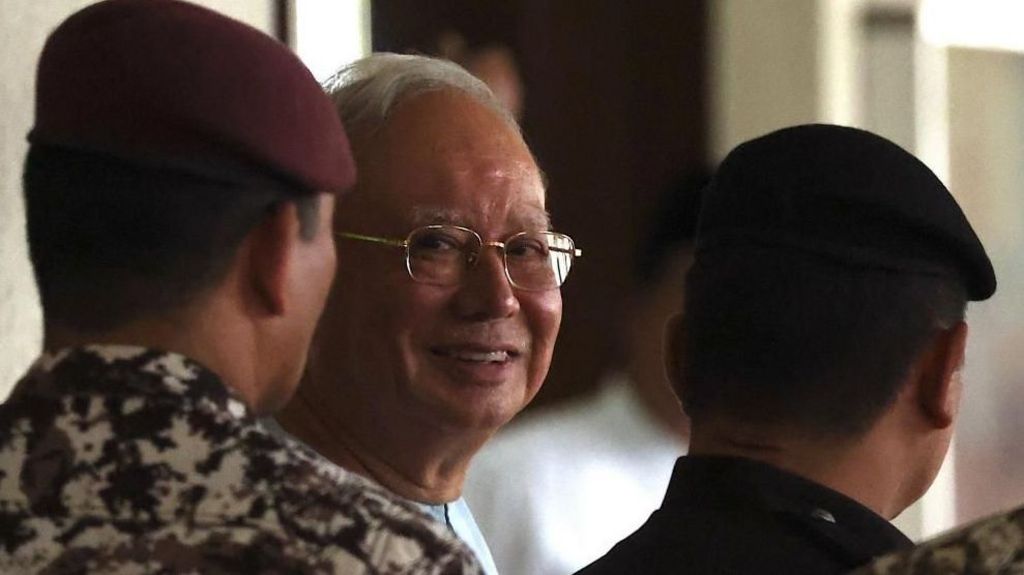
In a dramatic turn of events, Malaysia's disgraced former Prime Minister, Najib Razak, has been released from prison and placed under house arrest to serve the remainder of his jail sentence. The 73-year-old returned home late on Tuesday night, escorted by a heavily armed police convoy, marking the end of a four-year imprisonment following his conviction for corruption. Najib was found guilty of embezzling billions of dollars from the country's sovereign wealth fund, 1MDB, a scandal that brought down his government and made headlines globally over a decade ago.
The 1MDB scandal implicated not only Malaysian figures but also prominent entities such as Goldman Sachs and Hollywood. Investigators estimate that approximately $4.5 billion was siphoned from the state-owned wealth fund, with more than $1 billion reportedly ending up in accounts linked to Najib. However, his lawyers claim he was misled by his advisers, particularly financier Jho Low who remains at large and maintains his innocence.
Najib's mansion in a high-profile neighborhood of Kuala Lumpur was converted into a federal prison ahead of his homecoming. Critics argue that his release from jail undermines efforts to combat corruption, questioning its legal basis as Malaysian law reportedly does not provide for house arrest. Despite denying wrongdoing, Najib was convicted at two separate trials and received a 12-year sentence in 2020, which was later reduced on appeal. In September, the King of Malaysia granted him a conditional pardon to serve the remaining two years of his sentence at home.
Najib's party paid a $12 million fine as part of the terms of the royal pardon. He is currently serving a 42-million ringgit ($10 million) sentence, convicted of abuse of power, money laundering, and breach of trust over funds transferred from SRC International - a former unit of 1MDB - into his private accounts. Najib is appealing against a 15-year prison sentence in a case involving much larger sums of money, due to start after his house arrest ends, expected in August 2028.