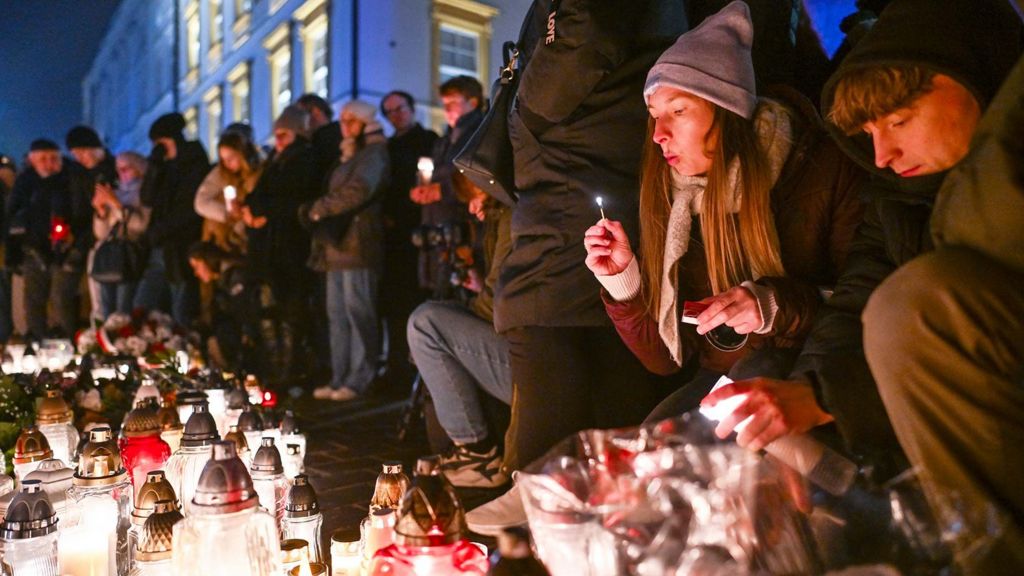
In the heart of Krakow, thousands gathered for a silent march on Monday night, mourning the victims of a weekend shooting incident that has deeply shaken Poland. Led by the President and Prime Minister, political rivals momentarily put aside their differences in a show of national unity following the country's deadliest attack in recent history. As the crowd reached the Market Square, a poignant bugle call echoed from the tower, symbolizing a collective grief that has enveloped the city.
The alleged gunman, identified as 24-year-old Michal Oksinski by local media, was critically injured during a shootout with police and later passed away in hospital. Initial reports suggested that he may have been motivated by far-right extremist views, but the national prosecutor's office has since stated it is too early to definitively attribute any ideological inspiration to him. The investigation continues, with authorities examining Oksinski's electronic devices and badges attached to his military-style outfit for clues.
The shooting spree claimed six lives, including a Polish painter in her 50s who was a mother of four, and two foreign nationals yet to be publicly identified. The incident has left the city subdued, with shops and cafes slowly resuming their normal activities. A local man died just outside the market square, and several drivers of horse-drawn carriages were seriously injured. As people pause to lay flowers and take pictures at the sites of the tragedy, a sense of unease permeates the usually vibrant city.
The government has announced an urgent review of gun ownership regulations following this incident, including psychological tests for potential weapon handlers, as Oksinski passed all such checks. The investigation into his motives and actions continues, with authorities seeking to understand why he carried out the attack and what role, if any, extremist ideologies played in his actions.