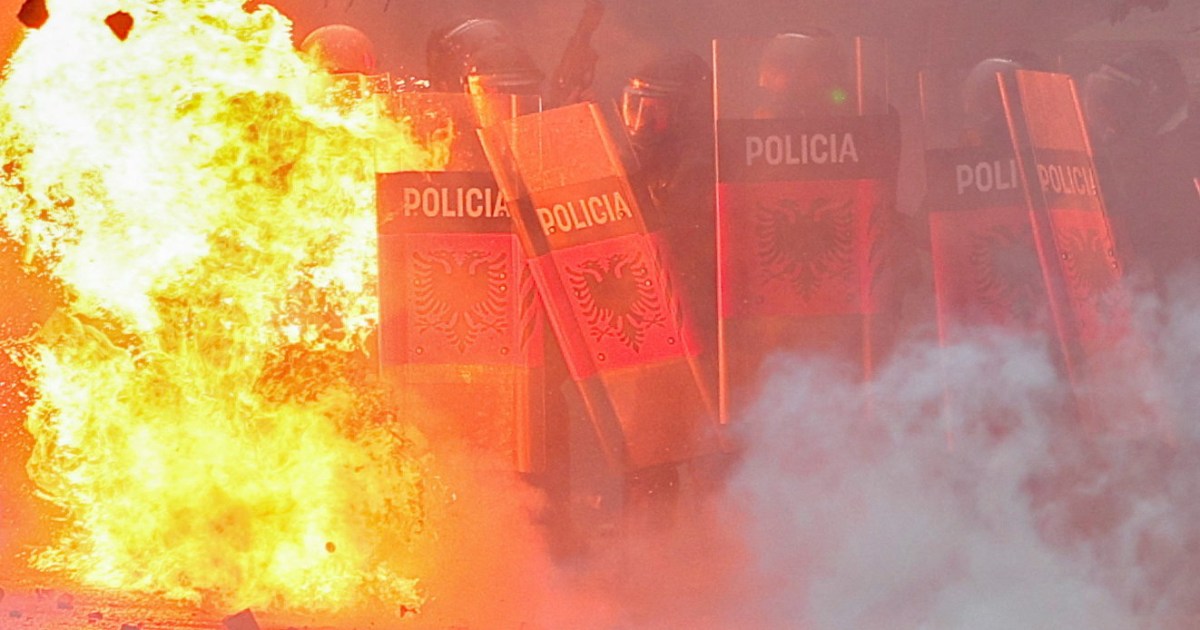
Antigovernment protests erupted in Albania's capital, Tirana, on the country's Independence Day, marking a significant escalation in the ongoing demonstrations against Prime Minister Edi Rama. The clashes, which involved police and protesters, were instigated by students and opposition figures who had called for the nationwide protest. The protests have been gaining traction since May, originally sparked by a luxury hotel project in a coastal nature reserve linked to President Donald Trump's family, but later expanding to include concerns over poor healthcare facilities and lack of opportunities for young people.
In the latest demonstration, protesters hurled stones and petrol bombs at police who responded with water cannon and tear gas. The health ministry reported eight injuries, including a police officer and two journalists. The protests have been ongoing due to widespread discontent with the political parties that have failed to represent the people since the fall of communism in the 1990s, according to Arian Lleshi, a protester who travelled from the United Kingdom. Tirana resident Suzana Gjeta, a retiree, demonstrated for both young people and those living on minimal pensions, expressing hope that the current system would be replaced, Edi Rama would resign, and corruption would end.
The European Union, which Albania aspires to join, has called for an investigation into excessive force by police and urged all parties to de-escalate the tension. The government had previously granted police the power to restrict gatherings near public institutions and impose fines on protesters caught looting or concealing their identity, leading to smaller crowds at subsequent protests.
Antigovernment protests in Albania reached a new high on the country's Independence Day, as students and opposition figures led thousands in a nationwide demonstration against Prime Minister Edi Rama. The clashes between police and protesters in Tirana were the latest development in the leaderless protest movement known as the Flamingo Revolution, which began in May over a luxury hotel project linked to President Donald Trump's family and allegations of corruption. The protests have since broadened to include concerns about poor healthcare facilities and opportunities for young people.
The health ministry reported eight injuries, including a police officer and two journalists, during the clashes. Arian Lleshi, a protester from the United Kingdom, expressed frustration with the political parties that have failed to represent the people since the fall of communism in the 1990s. Suzana Gjeta, a retiree demonstrating in Tirana, voiced her support for both young people and those living on minimal pensions, hoping for an end to the current system, Edi Rama's resignation, and corruption.
The European Union has called for an investigation into excessive force by police and urged all parties to de-escalate the tension. The government had previously granted police the power to restrict gatherings near public institutions and impose fines on protesters caught looting or concealing their identity, leading to smaller crowds at subsequent protests.
Antigovernment protests in Albania reached a boiling point on the country's Independence Day, with police and protesters clashing in Tirana. The demonstrations, led by students and opposition figures, have been ongoing since May as part of the Flamingo Revolution, initially sparked by a luxury hotel project linked to President Donald Trump's family and allegations of corruption. The protests have since expanded to encompass concerns about poor healthcare facilities and opportunities for young people.
The clashes in Tirana resulted in eight reported injuries, including a police officer and two journalists. Arian Lleshi, a protester from the United Kingdom, expressed discontent with the political parties that have failed to represent the people since the fall of communism in the 1990s. Suzana Gjeta, a retiree demonstrating in Tirana, voiced her support for both young people and those living on minimal pensions, hoping for an end to the current system, Edi Rama's resignation, and corruption.
The European Union has called for an investigation into excessive force by police and urged all parties to de-escalate the tension. The government had previously granted police the power to restrict gatherings near public institutions and impose fines on protesters caught looting or concealing their identity, leading to smaller crowds at subsequent protests.