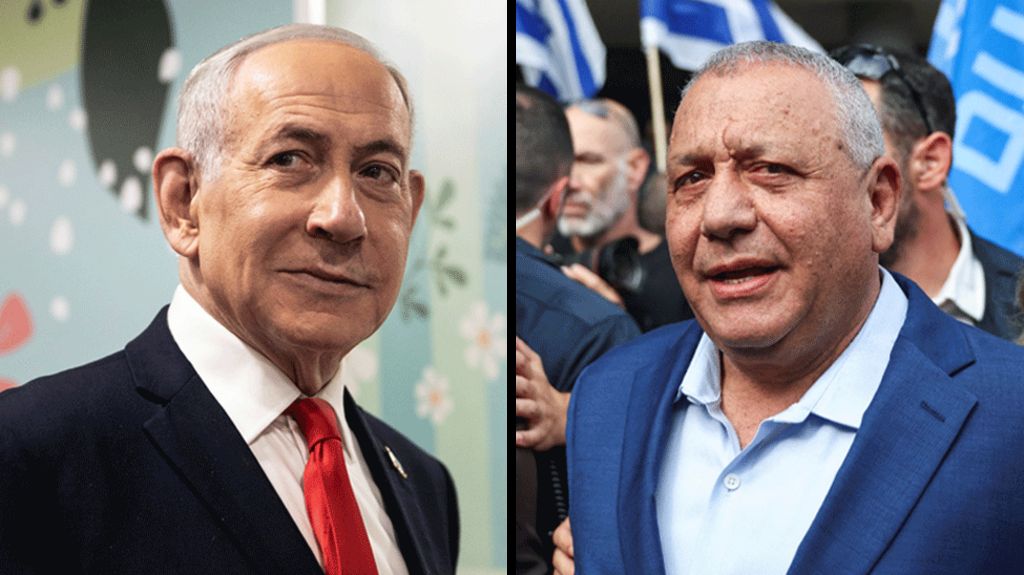
Israeli political landscape is witnessing a potential shift as Prime Minister Benjamin Netanyahu has proposed a national unity government, with his rival Gadi Eisenkot serving as the initial prime minister. In a social media post on Saturday, Netanyahu expressed his willingness to put aside party principles and support a rotation, initially acting as an alternate prime minister. Eisenkot, tasked with forming a coalition within 28 days by Israel's President Isaac Herzog, has responded favorably, inviting Netanyahu for "genuine and accelerated negotiations."
The proposal comes after accusations from Eisenkot that Netanyahu's Likud party has been stalling coalition talks, nearing the 6 December deadline. Eisenkot's centrist Yashar party, alongside three other Jewish opposition parties, won 48 seats in October's election, while Netanyahu's bloc secured 53. Although both fall short of a majority in the 120-seat Knesset, Herzog consulted all parties before giving Eisenkot the first opportunity to form a government.
Two Arab-led alliances, United Arab List and Joint List, have gained an unprecedented 19 seats due to increased Arab voter turnout. Although they could potentially serve as kingmakers, Jewish parties have pledged not to collaborate with them in forming a government. Eisenkot has made progress towards securing the necessary majority by agreeing coalition deals with Yisrael Beiteinu and The Democrats. His fourth alliance member, Beyachad, led by former Prime Minister Naftali Bennett, expressed support for a unity government involving Likud, with Eisenkot serving first as PM.
Netanyahu's proposed unity government aims to address an "existential danger" facing Israel, and Eisenkot welcomes the offer as a sign of serious intentions. However, negotiations will be based on a detailed proposal sent to Netanyahu last Sunday, with no response received thus far. The proposal marks a significant development in Israeli politics, which has seen five separate elections since 2019 due to persistent political fractures.