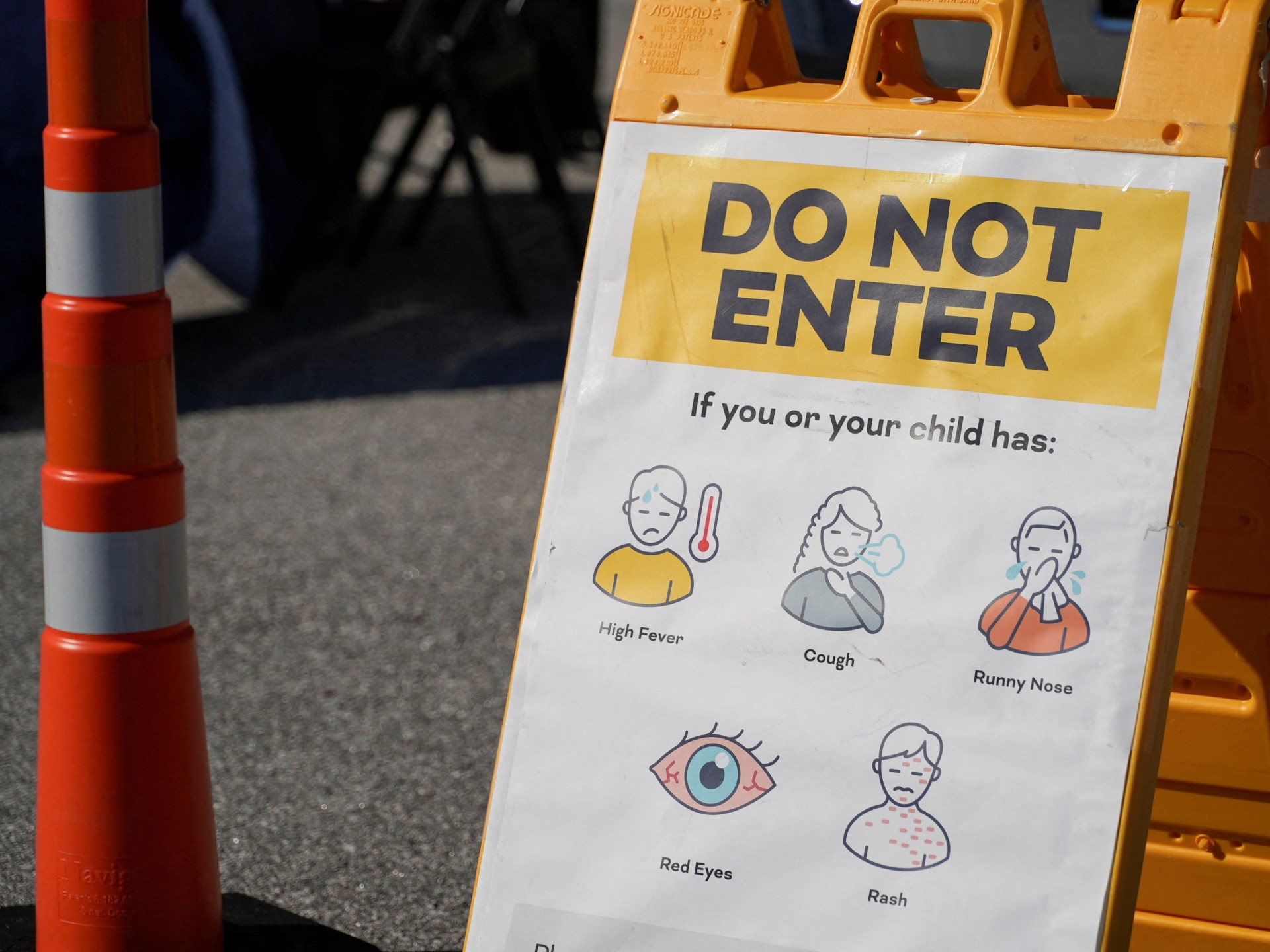
The World Health Organization's Americas branch, the Pan American Health Organization (PAHO), has declared the United States, Bolivia, and Mexico as countries with endemic measles for the first time since 2000. This decision comes after continuous circulation of the virus in each country for at least a year, resulting in the withdrawal of the measles elimination status. The CDC remains committed to stopping measles outbreaks and regaining the country's elimination status, but with over 7,700 reported cases since early 2025, this marks the highest number of cases in more than three decades. Vaccine hesitancy has grown under Health Secretary Robert F Kennedy Jr., who has repeatedly cast doubt on vaccine safety despite scientific evidence to the contrary. The CDC continues to emphasize that vaccination is crucial for protection against measles and is providing additional funding to state and local health departments to strengthen vaccination efforts, surveillance, and outbreak response.
---
The PAHO's recommendation to withdraw the US's measles elimination status follows a review of epidemiological and laboratory evidence submitted by the CDC. This decision signifies a historic setback for public health in the United States, with the country grappling with its largest outbreak in over three decades. The climbing numbers of measles cases have been fueled by vaccine hesitancy, which has grown under Health Secretary Robert F Kennedy Jr., who has repeatedly questioned vaccine safety despite scientific evidence to the contrary.
---
The loss of the US's measles elimination status serves as a wake-up call for public health officials and can be seen as a stain on the country's public health program. Matt Ferrari, a biology professor and director of Pennsylvania State University's Center for Infectious Disease Dynamics, believes that this loss of status should prompt public health officials to reevaluate their strategies for controlling measles. The US had previously been seen as a model in efforts to eliminate local measles transmission, but with the loss of its elimination status, it may need to look elsewhere for expertise. Edwin Asturias, a professor of paediatrics, infectious disease, and epidemiology at the University of Colorado, described the loss of status as a "stain" on the country's public health program. He highlighted the need to expand vaccination efforts, particularly among adults older than 20, by making vaccines available in workplaces, places of worship, and other community settings.