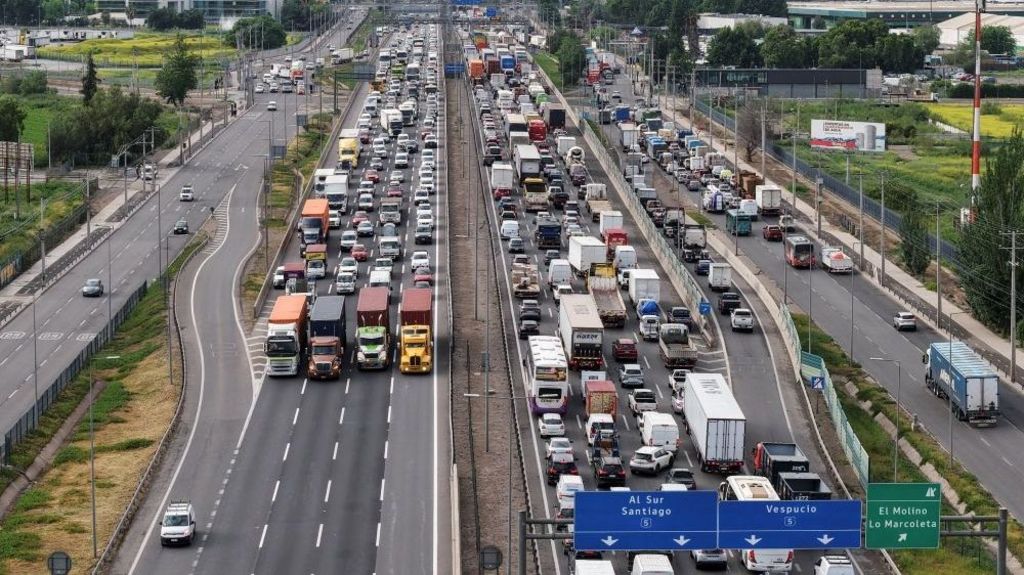
Hundreds of transport workers in Chile, including bus and lorry drivers, have escalated their protests against rising fuel prices by blocking major highways and roads across the country. The demonstrations, led by the Fuerza del Norte trade union and the No+TAG civic protest movement, began on Tuesday and have disrupted traffic along key routes. The protesters are demanding a reduction in diesel prices, which have surged due to geopolitical tensions such as the war in Iran. Talks between government officials and protest leaders have so far failed to produce a resolution, with another meeting scheduled for Wednesday.
The ongoing strike is causing significant economic disruption, impacting both domestic economic activity and exports. Economy Minister Daniel Mas has called for further dialogue but warned that the protests must eventually end to clear the highways. The government of President José Antonio Kast has been dealing with public dissatisfaction over fuel prices for months. According to industry groups, the average price of diesel has increased by 74% since March. Juan Cornejo, president of the Association of Intercity Bus Owners, which represents 14 mid-sized companies, stated that they have reached their limit and are struggling with negative earnings. Lorry driver Claudio Elguezabal, who participated in a protest near Santiago on Tuesday, expressed concern about the unsustainable situation, stating that he is not currently making a profit and sometimes has to use his own money to cover clients' expenses.
The protests in Chile reflect a broader global trend of workers demanding relief from soaring fuel prices, which have been driven up by geopolitical tensions and supply chain disruptions. As countries around the world grapple with the economic impacts of these factors, it will be interesting to see how governments respond to the growing demands for action on this issue. The ongoing strike in Chile is a significant test case, as the government seeks to balance the need for dialogue with the need to maintain economic stability and security.
In an unprecedented show of solidarity, workers from various sectors in different countries are protesting against soaring fuel prices that have been driven up by geopolitical tensions and supply chain disruptions. The latest example is Chile, where hundreds of transport workers, including bus and lorry drivers, have blocked major highways and roads in a bid to demand relief from rising diesel prices. The protests, led by the Fuerza del Norte trade union and the No+TAG civic protest movement, began on Tuesday and have disrupted traffic along key routes.
The ongoing strike in Chile is just one example of this global trend. In recent months, workers in countries such as India, South Africa, and Brazil have also taken to the streets to demand action on rising fuel prices. The protests are a clear indication that workers across borders are feeling the economic impact of these price increases, which have been driven up by factors such as the war in Iran and supply chain disruptions caused by the COVID-19 pandemic.
The governments of these countries are facing increasing pressure to address the issue and find solutions that can help alleviate the burden on workers and consumers alike. In Chile, for example, Economy Minister Daniel Mas has called for further dialogue with protest leaders but warned that the protests must eventually end to clear the highways. The government of President José Antonio Kast has been dealing with public dissatisfaction over fuel prices for months, as the average price of diesel has increased by 74% since March.
As the global economy continues to recover from the COVID-19 pandemic, it is likely that we will see more instances of workers protesting against soaring fuel prices. Governments will need to find ways to balance the need for dialogue with the need to maintain economic stability and security. The ongoing strike in Chile is a significant test case, as the government seeks to navigate this complex landscape and find solutions that can help alleviate the burden on workers and consumers alike.
In a move reminiscent of the widespread protests that rocked Chile in 2019, transport workers have taken to the streets once again, this time to demand relief from soaring diesel prices. Hundreds of bus and lorry drivers have blocked major highways and roads across the country in an effort to put pressure on the government to take action. The protests, which began on Tuesday, are led by the Fuerza del Norte trade union and the No+TAG civic protest movement and have disrupted traffic along key routes.
The ongoing strike is causing significant economic disruption, impacting both domestic economic activity and exports. Economy Minister Daniel Mas has called for further dialogue with protest leaders but warned that the protests must eventually end to clear the highways. The government of President José Antonio Kast has been dealing with public dissatisfaction over fuel prices for months, as the average price of diesel has increased by 74% since March.
The transport workers are demanding a reduction in diesel prices, which have surged due to geopolitical tensions such as the war in Iran. According to industry groups, the high fuel prices are making it increasingly difficult for transport companies to operate profitably. Juan Cornejo, president of the Association of Intercity Bus Owners, which represents 14 mid-sized companies, stated that they have reached their limit and are struggling with negative earnings. Lorry driver Claudio Elguezabal, who participated in a protest near Santiago on Tuesday, expressed concern about the unsustainable situation, stating that he is not currently making a profit and sometimes has to use his own money to cover clients' expenses.
The ongoing strike in Chile reflects a broader global trend of workers demanding relief from soaring fuel prices, which have been driven up by geopolitical tensions and supply chain disruptions. As countries around the world grapple with the economic impacts of these factors, it will be interesting to see how governments respond to the growing demands for action on this issue. The ongoing strike in Chile is a significant test case, as the government seeks to balance the need for dialogue with the need to maintain economic stability and security.