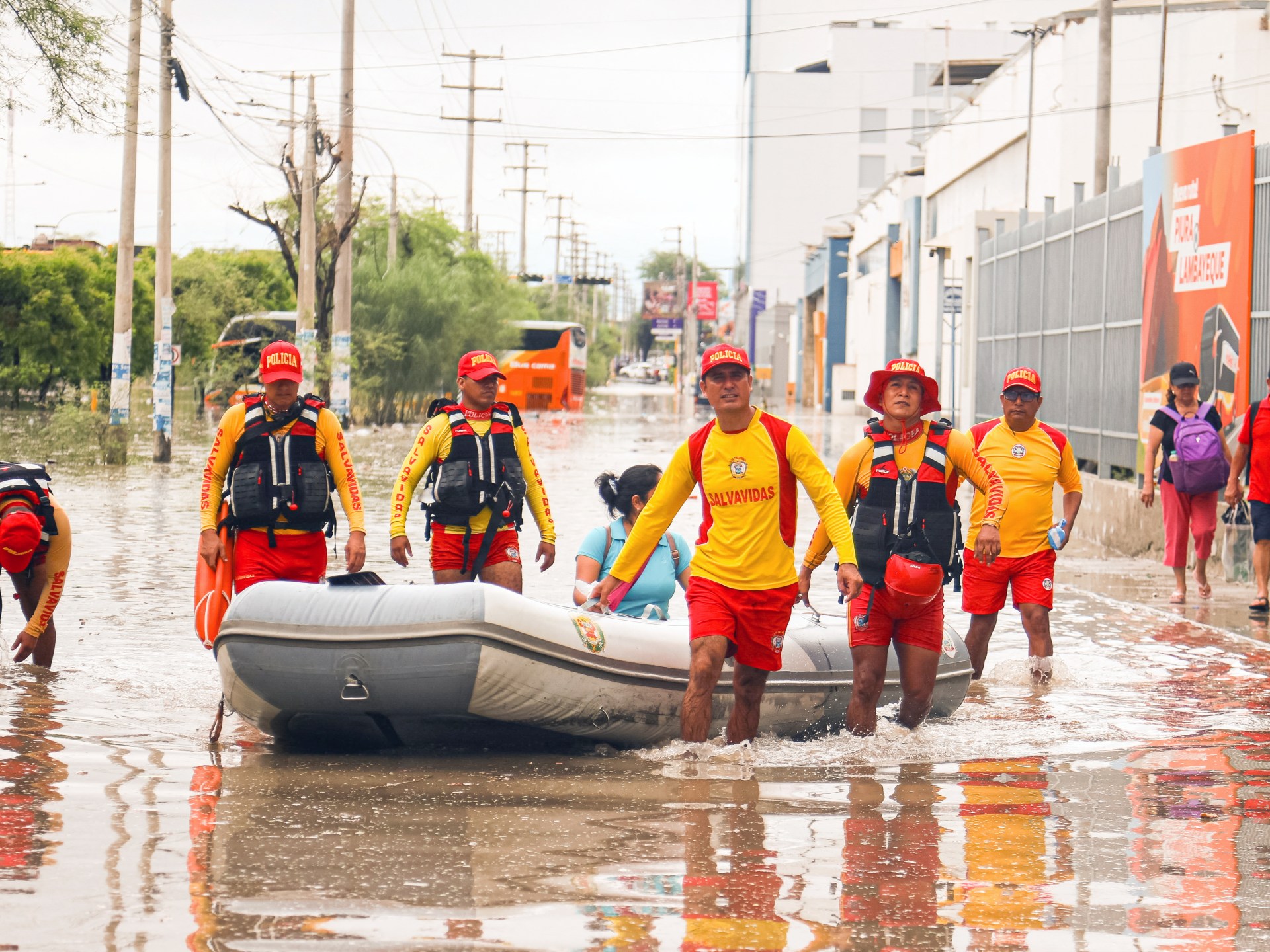
A series of catastrophic floods, attributed to the powerful El Niño phenomenon, have wreaked havoc in northern Peru and coastal Ecuador. Since late August, the region has been pummeled by relentless storms, resulting in at least 34 fatalities in Ecuador and affecting over 47,000 people. In Peru, about 2,000 families have been impacted, with President Keiko Fujimori declaring the situation a "mega Nino." The city of Piura has witnessed a record-breaking 143mm (5.6 inches) of rain in 24 hours, causing widespread flooding and necessitating water rescues and evacuations. Road closures have further compounded the crisis, isolating affected communities. Forecasters anticipate that El Niño will maintain its "extraordinary" strength until February, extending a red alert for Peru's northern regions through Monday. In Ecuador, the Tumbes River has flooded part of the Pan-American Highway, the country's main north-south road, and disruptions have been reported in local elections scheduled for Sunday. The storms are predicted to be the strongest on record, posing significant challenges for affected countries and potentially impacting global food prices due to crop yield and fish catch reductions.
The ongoing El Niño phenomenon, which began with a warming of the tropical Pacific, has been classified as very strong or "super," and is causing devastating floods across northern Peru and coastal Ecuador. Since late August, heavy rain and subsequent flooding have resulted in at least 34 fatalities in Ecuador and affected over 47,000 people. In Peru, the city of Piura experienced a record-breaking 143mm (5.6 inches) of rain in 24 hours, leading to widespread flooding and necessitating water rescues and evacuations. The Tumbes River has also flooded part of the Pan-American Highway in Ecuador, causing road closures and further complicating relief efforts. Forecasters predict that El Niño will remain at "extraordinary" strength until February, with Peru's northern regions under a red alert through Monday. The storms are expected to be the strongest on record, potentially leading to significant disruptions in global food prices due to reduced crop yields and fish catches.
The powerful El Niño phenomenon has triggered a series of devastating storms across northern Peru and coastal Ecuador, causing widespread flooding, water rescues, evacuations, and road closures. Since late August, at least 34 people have died in Ecuador, with over 47,000 affected, according to the country's risk management agency. In Peru, President Keiko Fujimori has declared a "mega Nino," as about 2,000 families have been impacted by floods, with the city of Piura experiencing a record-breaking 143mm (5.6 inches) of rain in 24 hours. The Tumbes River has flooded part of the Pan-American Highway in Ecuador, isolating affected communities and causing significant disruptions. Forecasters expect El Niño to remain at "extraordinary" strength until February, extending a red alert for Peru's northern regions through Monday. The storms are predicted to be the strongest on record, potentially leading to increased food prices due to crop yield and fish catch reductions.