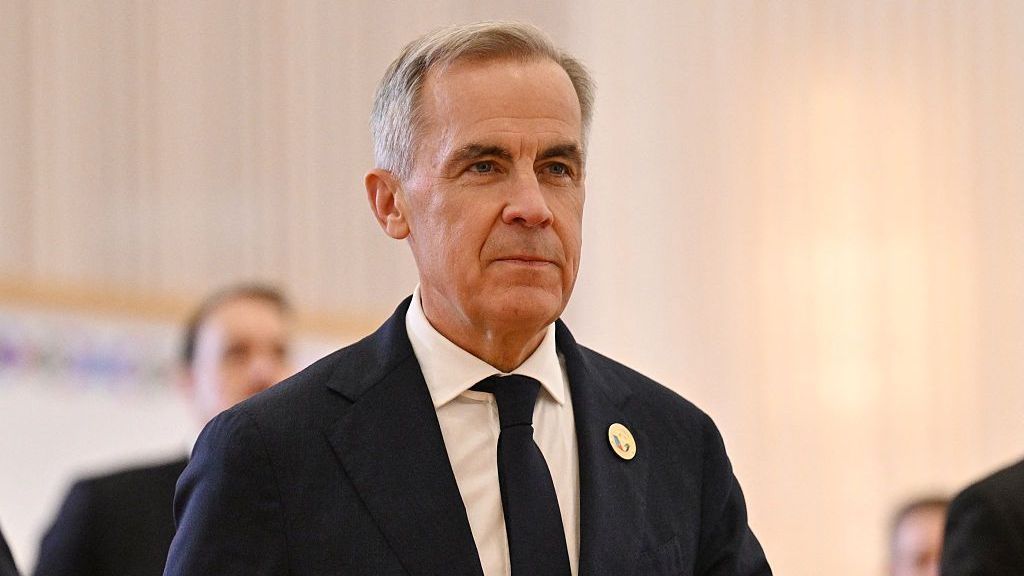
Prime Minister Mark Carney is considering Chinese automakers as a potential solution to revitalize Canada's struggling auto sector, which has been affected by the 25% tariff imposed by the US on non-American vehicles. During his visit to China for the Asia-Pacific Economic Cooperation summit (Apec), Carney suggested that Canadian auto manufacturing could benefit from partnerships with European and Asian carmakers if a trade deal with the US cannot be reached. The move, however, has sparked controversy and criticism, particularly from those close to US President Donald Trump. Carney met with Chinese President Xi Jinping in China this week and discussed further tariff cuts, although no specific mention of vehicles was made in their talks. In January, Carney expressed optimism about opening the door to China's electric vehicle (EV) market, which could result in investment into Canadian-owned companies and the creation of manufacturing jobs in the sector. The tariffs on imports of Canadian-made vehicles have resulted in thousands of job losses and anxiety over the future of the industry, as 90% of cars made in Canada are shipped to and sold in the US. China has shown interest in entering the North American EV market and recently announced plans to allow 49,000 EVs from China into Canada at a low tariff rate, with intentions to gradually raise that quota to 70,000 by 2030. This move represents a significant departure from the US, which has heavily tariffed Chinese EVs since the presidency of Joe Biden in order to protect domestic manufacturing. American tariffs on Canadian-made vehicles have also led to the closure of factories such as Stellantis' assembly plant in Brampton, Ontario, resulting in the loss of 2,200 jobs and concerns from Canadian auto workers' unions about potential job losses due to foreign investment.
Canada is exploring partnerships with Chinese electric vehicle (EV) manufacturers as a response to the 25% tariff imposed by the US on non-American vehicles, which has affected its struggling auto sector. During his visit to China for the Asia-Pacific Economic Cooperation summit (Apec), Prime Minister Mark Carney indicated that Canadian auto manufacturing could benefit from partnerships with European and Asian carmakers if a trade deal with the US cannot be reached. The move, however, has drawn criticism from those close to US President Donald Trump. In their recent meeting in China, Carney and Chinese President Xi Jinping discussed further tariff cuts, although no specific mention of vehicles was made. In January, Carney expressed hope about opening the door to China's EV market, which could result in investment into Canadian-owned companies and the creation of manufacturing jobs in the sector. American tariffs on imports of Canadian-made vehicles have resulted in thousands of job losses and anxiety over the future of the industry, as 90% of cars made in Canada are shipped to and sold in the US. China has expressed interest in entering the North American EV market and recently announced plans to allow 49,000 EVs from China into Canada at a low tariff rate, with intentions to gradually raise that quota to 70,000 by 2030. This move represents a significant departure from the US, which has heavily tariffed Chinese EVs since the presidency of Joe Biden in order to protect domestic manufacturing.
The closure of Stellantis' assembly plant in Brampton, Ontario has highlighted the challenges faced by Canada's auto sector amid the 25% tariff imposed by the US on non-American vehicles. The plant, which employed 2,200 workers and produced models like the Dodge Challenger and Chrysler 300, has been idle since 2023 for a planned retooling but what was supposed to be a temporary shutdown became permanent after Trump's tariffs. As a result, the company shifted some manufacturing to Illinois in the US. The Canadian auto workers' union has expressed concern about the deal, calling it "underhanded" and warning that Canada could lose thousands of high-paying jobs as a result. There are also concerns about potential foreign investment from Chinese EV manufacturers, who have already been lobbying the Canadian government for access to the market. This move has sparked controversy and opposition from some within Canadian politics, including Ontario Premier Doug Ford, who warned against opening the door for Chinese EV kits to be assembled in Canada at the Brampton plant. It remains to be seen how the ongoing trade tensions between the US and Canada will impact the future of the auto sector in Canada.