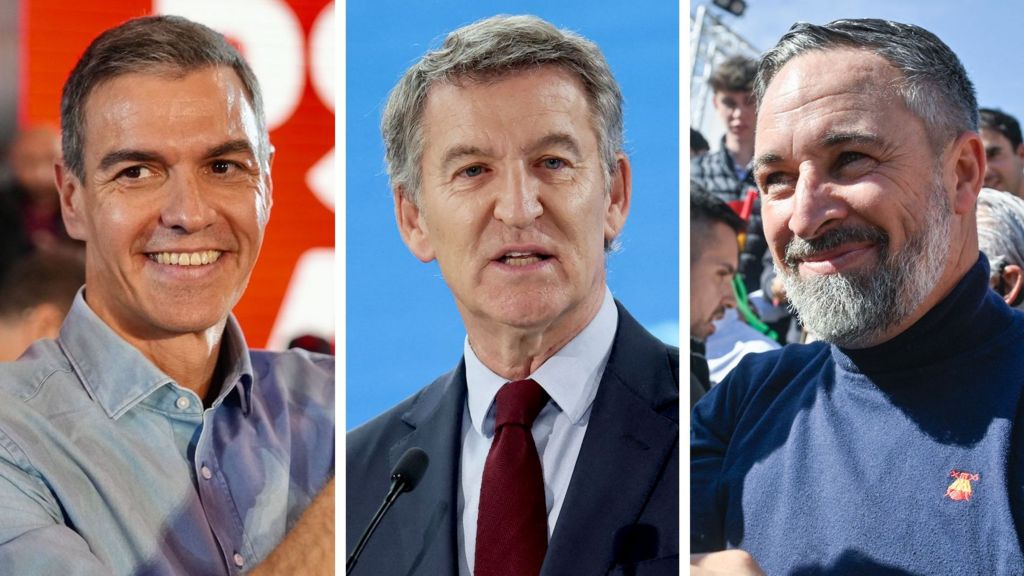
Spain prepares for a general election on November 29, with the conservative People's Party (PP) and the far-right Vox party leading in the polls after eight years of Socialist-led rule. The election follows a turbulent period marked by corruption scandals, a migrant crisis, and rail disasters that left 115 people dead.
As leader of the conservative opposition since 2022, Feijóo of the PP is the front-runner to become Spain's next prime minister. He promises management expertise and a focus on governance, having served as president of the north-west Galicia region for 13 years. However, the PP fell short of an outright parliamentary majority in 2023, necessitating coalition talks with Vox, a far-right party with anti-immigration and populist leanings.
Sánchez, leader of the Socialist Workers' Party (PSOE) since 2017, has faced a series of corruption scandals and a migrant crisis in Spain's Ceuta exclave on the Moroccan border. Recently, two deadly rail disasters have further damaged his reputation. Despite these challenges, Sánchez has promised to resolve the housing crisis and deliver an "epic comeback" for progressive Spain at the ballot box. However, the rise of Vox could prove decisive in this election, with opinion polls showing them comfortably in third place and taking votes from the Socialists.
Vox leader Abascal denies his party is far-right and has managed to bring it into the mainstream. He advocates for repatriating migrants in an illegal situation and "remigration" of foreigners who do not contribute to Spain. Abascal's promises to use the Spanish navy to defend national borders and restrict immigration have resonated with some voters, potentially sealing Sánchez's fate in this closely contested election.