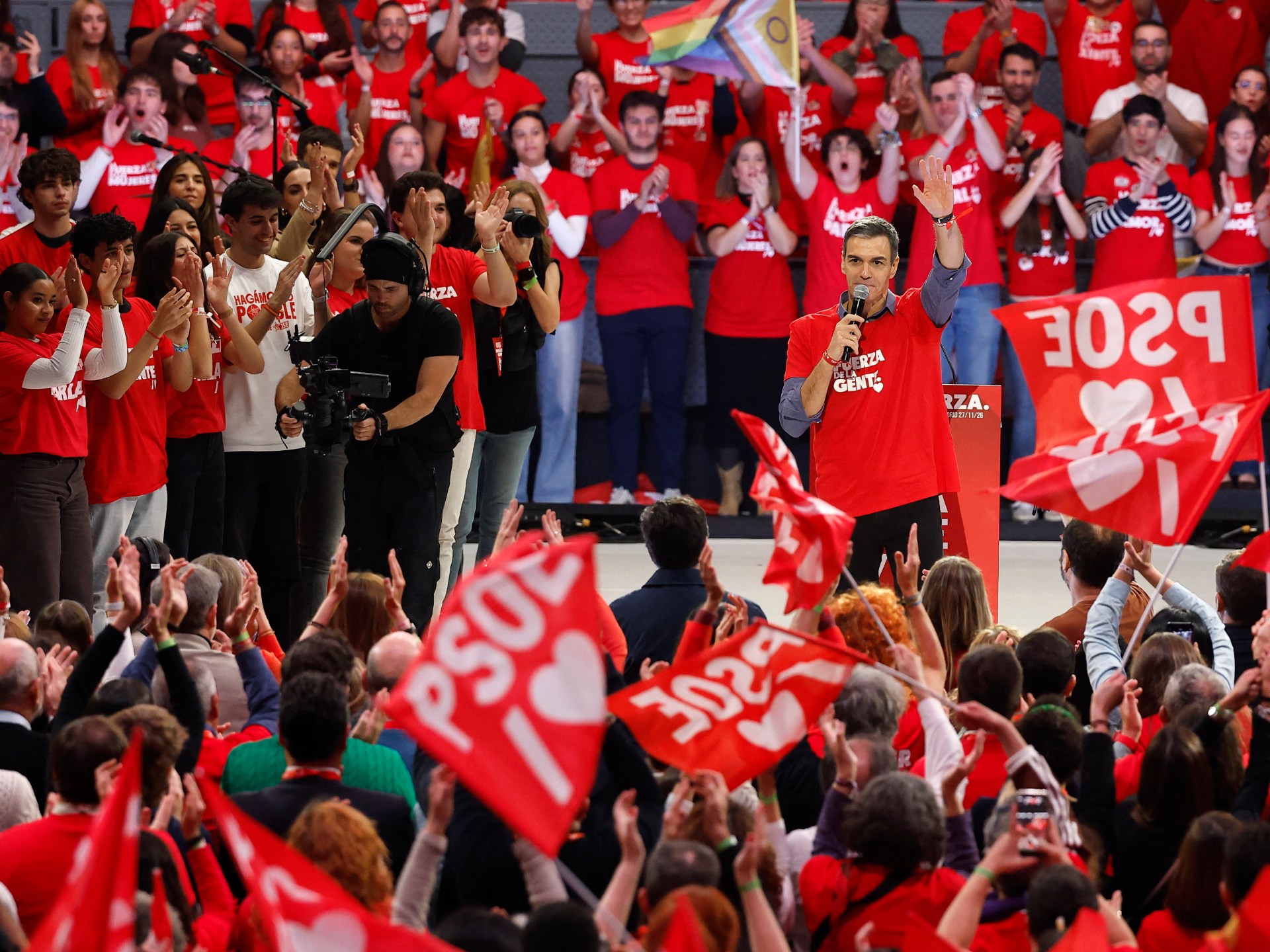
In an election that could mark a significant shift in Spanish politics, voters are set to cast their ballots on Sunday, potentially allowing the far-right party Vox to enter the national government for the first time since the end of Francisco Franco's dictatorship half a century ago. The campaign has been dominated by issues such as housing and immigration, with two contrasting views of socialist Prime Minister Pedro Sanchez's eight years in power at the forefront. One perspective portrays Spain as a beacon of social progress and economic growth in Europe, while the opposing view accuses the government of corruption and opportunism, calling for change. Polls suggest that the conservative People's Party (PP) will secure the most seats but will need the support of Vox to form a majority in the 350-seat Congress of Deputies. The PP, led by Alberto Nunez Feijoo, is predicted to form a coalition or a minority government with Vox's backing in parliament. Sanchez remains optimistic about preventing a right-wing surge, citing the potential mobilization of left-leaning voters. However, concerns persist over issues such as housing affordability, economic disparity, and corruption cases involving Sanchez's inner circle. The far-right Vox party, campaigning on national priorities and a ban on mass migration regularisation, is predicted to make the most significant gains among major parties, potentially doubling its representation in Congress from 2019.
Spain is gearing up for a polarising general election on Sunday that could see the far-right Vox party entering the national government for the first time since the end of Francisco Franco's dictatorship. The campaign has focused heavily on issues like housing and immigration, with two starkly different interpretations of socialist Prime Minister Pedro Sanchez's eight-year tenure in power. One perspective presents Spain as a bastion of social progress and economic growth, while the opposition view alleges corruption and opportunism, calling for change. Polls indicate that the conservative People's Party (PP) will win the most seats but will require the support of Vox to secure an outright majority in the 350-seat Congress of Deputies. It is projected that the PP and Vox together could reach the required 176 seats, giving PP leader Alberto Nunez Feijoo a path to power via either a coalition or a minority government backed by Vox in parliament. Despite the unfavourable predictions, Sanchez expresses confidence that left-leaning voters will rally to prevent a right-wing surge.
Spain is poised for a potential political transformation as voters head to the polls in an election that could see the far-right party Vox entering the country's national government for the first time since the end of Francisco Franco's dictatorship half a century ago. The campaign has been characterized by contentious debates on housing and immigration, with two contrasting views of socialist Prime Minister Pedro Sanchez's eight years in power at the forefront. One perspective portrays Spain as a leader in social progress and economic growth in Europe, while the opposing view alleges corruption and opportunism, calling for change. Polls suggest that the conservative People's Party (PP) will secure the most seats but will need the backing of Vox to form a majority in the 350-seat Congress of Deputies. The PP, led by Alberto Nunez Feijoo, is predicted to forge a coalition or a minority government with Vox's support in parliament. Sanchez remains hopeful that left-leaning voters will mobilize to prevent a right-wing surge, citing the potential impact of his popularity among Europe's progressives and his government's economic achievements. However, concerns persist over issues like housing affordability, economic disparity, and corruption cases involving Sanchez's inner circle. The far-right Vox party, advocating for national priorities and a ban on mass migration regularisation, is predicted to make significant gains compared to other major parties, potentially doubling its representation in Congress from 2019.