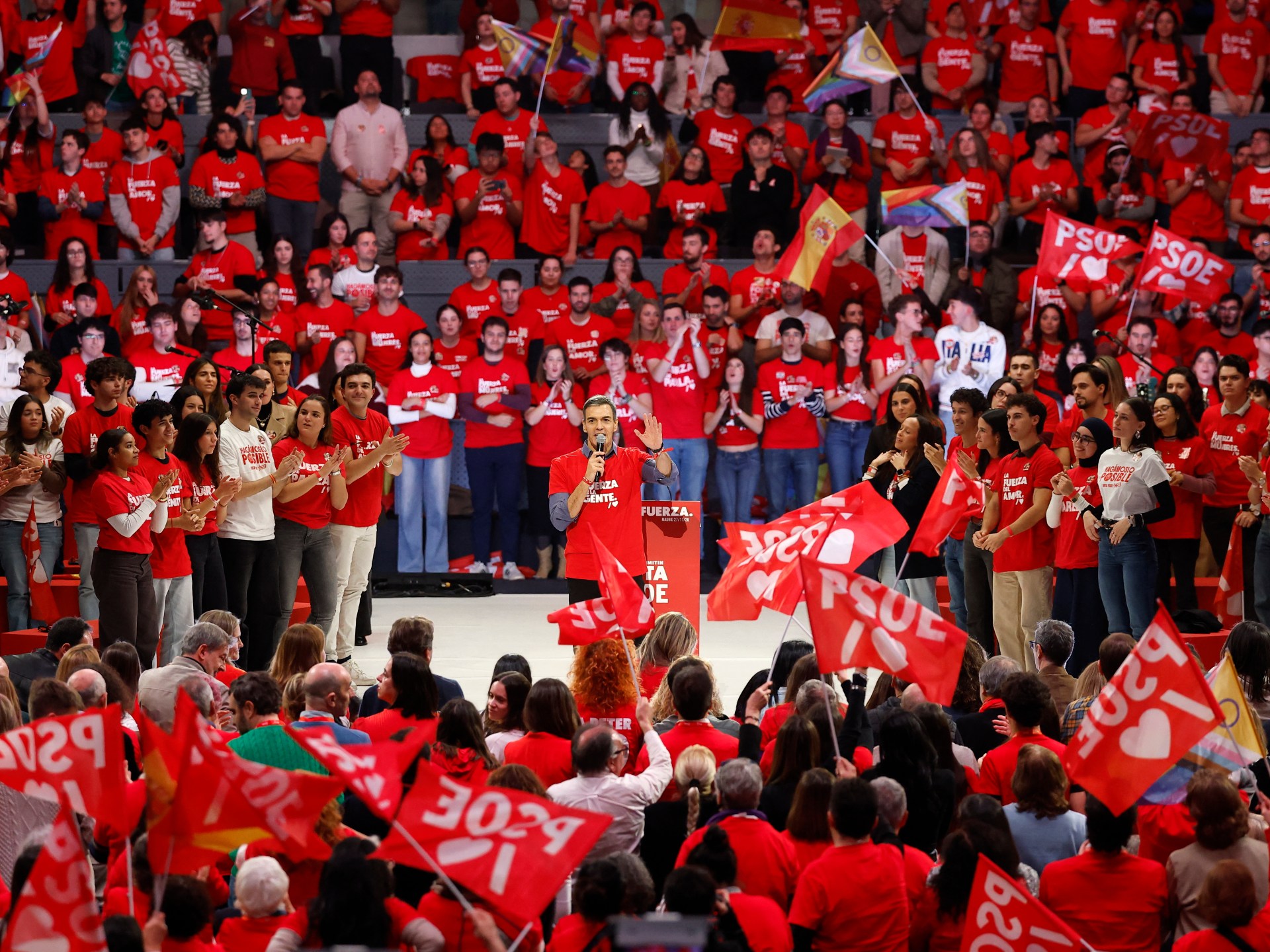
In a pivotal moment for Spain's political landscape, the country is set to vote in a snap election on Sunday, potentially welcoming the far-right Vox party into national government for the first time since the fall of Francisco Franco's dictatorship over four decades ago. The polls suggest a victory for the conservative People's Party (PP), which may need the support of Vox to form a majority in parliament. Prime Minister Pedro Sanchez, who has led a fragile minority government since 2018, called the early election after his housing measures were rejected by parliament. Spain faces a housing shortage of around 750,000 homes, and recent protests and a general strike have highlighted rising rents and evictions.
The PP leader, Alberto Nunez Feijoo, positions himself as a sensible technocrat, while Vox advocates for stricter immigration controls, prioritizing the needs of Spanish citizens over foreign residents, and even expelling migrants. Vox's leader, Santiago Abascal, rejects the label "far right" and describes his party's positions as "common sense." Sanchez has warned that a PP-Vox government would represent a regression, rolling back the clock by 40 to 50 years.
Sanchez defends his leadership, citing Spain's status as one of the fastest-growing economies in the European Union, with a higher minimum wage and record-low unemployment rates. However, rising prices have offset these gains for many Spaniards, and Sanchez's image has been tarnished by corruption scandals, deadly train crashes, and a nationwide power cut. Notably, Sanchez is one of the few European leaders to defend migration as beneficial for the economy, granting an amnesty to over one million undocumented people this year, which has led to increased arrivals, including record numbers reaching the Canary Islands this month.
A defeat for Sanchez would leave only Denmark, Lithuania, and Malta with centre-left leaders in the EU, reflecting a broader trend of far-right parties gaining ground across Europe, with elections scheduled next year in France, Italy, Greece, and Poland. This development underscores the shifting political landscape in Europe, where traditional parties struggle to maintain their influence in the face of growing populist sentiment.