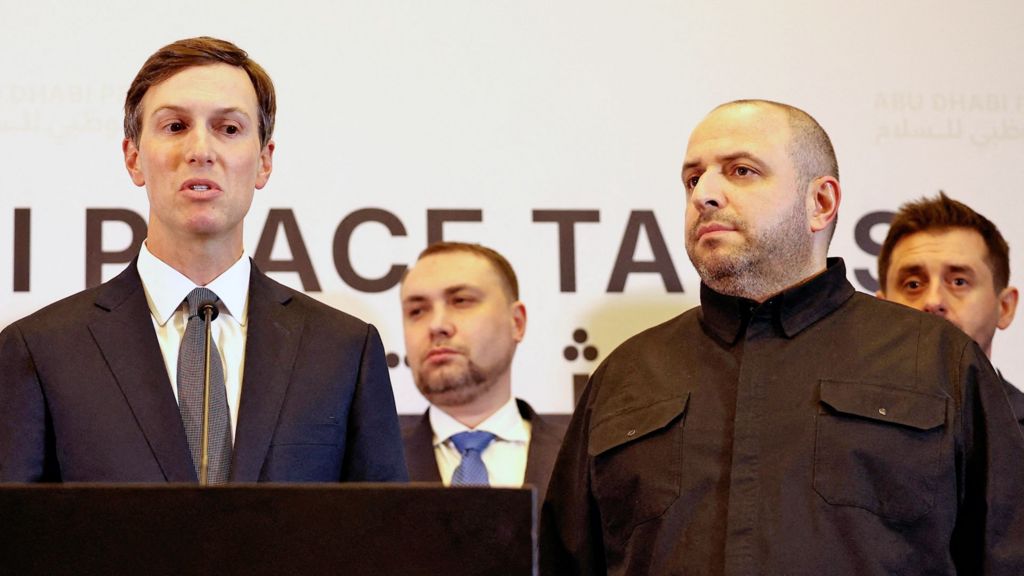
Trilateral talks between Russia, Ukraine, and the United States in Abu Dhabi aimed at resolving the conflict in Ukraine have concluded, with no significant breakthroughs reported. The discussions, which marked the first round since February, were particularly challenging according to Ukrainian negotiator Davyd Arakhamia, who attributed this to Russia's strict directives. Despite some openings being identified by the American side, there remains no sign of an end to the nearly five-year war sparked by Russia's invasion.
The talks centered around Europe's security framework, with a focus on reassurances for Ukraine that its allies will intervene should it face attack again, despite not being a NATO member. For Moscow, the discussions likely encompassed limiting NATO's influence in Eastern Europe, a concern for the Kremlin since the alliance's eastward expansion. The US hopes to establish a new security framework involving Ukraine, Russia, and Europe that could secure lasting peace, while the Kremlin has advocated for a fair and new global security system.
The latest round of talks also highlighted disagreements on whether discussions about future security should precede or follow a ceasefire. While the Europeans and Kyiv favor a ceasefire before discussions, the Kremlin insists that fighting stops only after an agreement is reached. Any peacetime security framework is contingent upon the war ending, but this cannot occur until there's an agreement on territory and all other bilateral issues, such as Ukraine's eastern region of Donetsk, which is largely occupied by Russia. This matter was identified as particularly difficult during the talks, with no resolution in sight regarding whether Russia still demands a Ukrainian withdrawal from the region.
The US has expressed a desire to bring European nations on board and plans to discuss this with Russian President Vladimir Putin when US negotiators Steve Witkoff and Jared Kushner meet him on Thursday. The talks have raised concerns about the current US administration's commitment to European security and its perceived softening towards the Kremlin. Despite these challenges, both sides have confirmed plans for a large-scale prisoner of war exchange, offering some hope for progress in resolving the ongoing conflict.