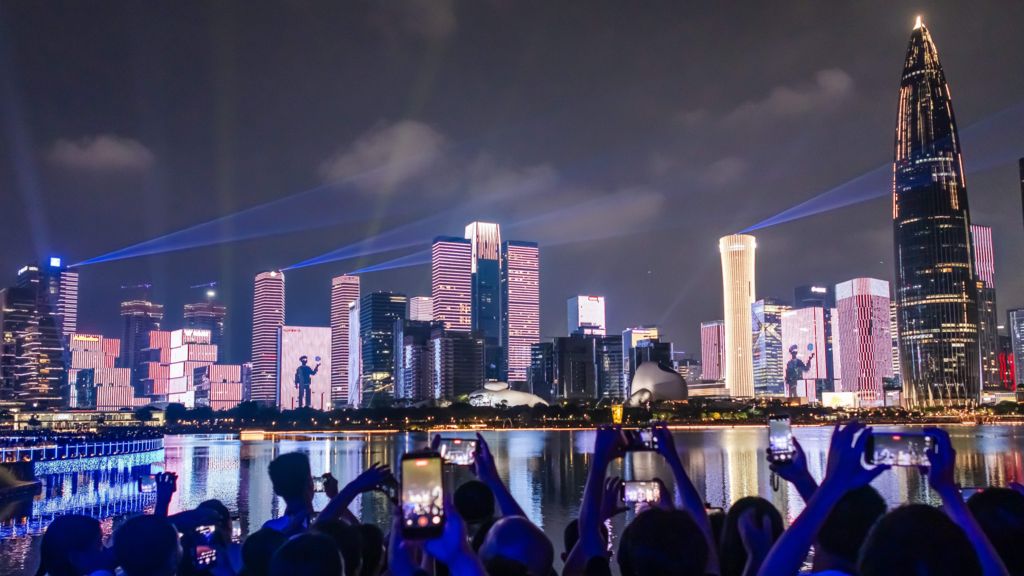
China is gearing up to display its cutting-edge artificial intelligence (AI) advancements during the upcoming global economic summit in Shenzhen. The city, often referred to as a 'city of dreams', has become synonymous with innovation and home-grown technology. At 27, Huang Shihua is one of many young engineers contributing to this AI revolution. From drones delivering food to robots serving coffee and explaining their origins, Shenzhen showcases a glimpse into Xi Jinping's ambitious vision for China. However, beyond the glamour of towering skyscrapers lies a different reality. The relocation of factories and job losses have created anxieties among workers, highlighting challenges that may not be evident to visiting world leaders.
The property market in Shenzhen, once a symbol of China's wealth, is experiencing a downturn, affecting consumer spending and household income. Factories are increasingly relying on exports or automation, leading to a rise in temporary jobs with lower pay and fewer benefits. A delivery driver in his 40s encapsulates the sentiment, stating, "Shenzhen is not a magic place anymore."
Despite these challenges, young engineers like Huang remain optimistic about AI's potential. They envision robots taking on repetitive tasks, improving safety, and even contributing to global equality by reshaping production lines in emerging economies. For them, Shenzhen represents a new 'America', where dreams can be realized and wealth earned. Yet, the city's future remains uncertain, with questions lingering about its ability to accommodate and sustain this ambitious vision of technological progress.
As world leaders gather in Shenzhen, they will witness China's AI wonders but may miss the hidden challenges that lie beneath the city's shiny façade. The juxtaposition between the dazzling promise of AI and the anxieties of workers serves as a reminder of the complexities and contradictions shaping China's economic landscape.