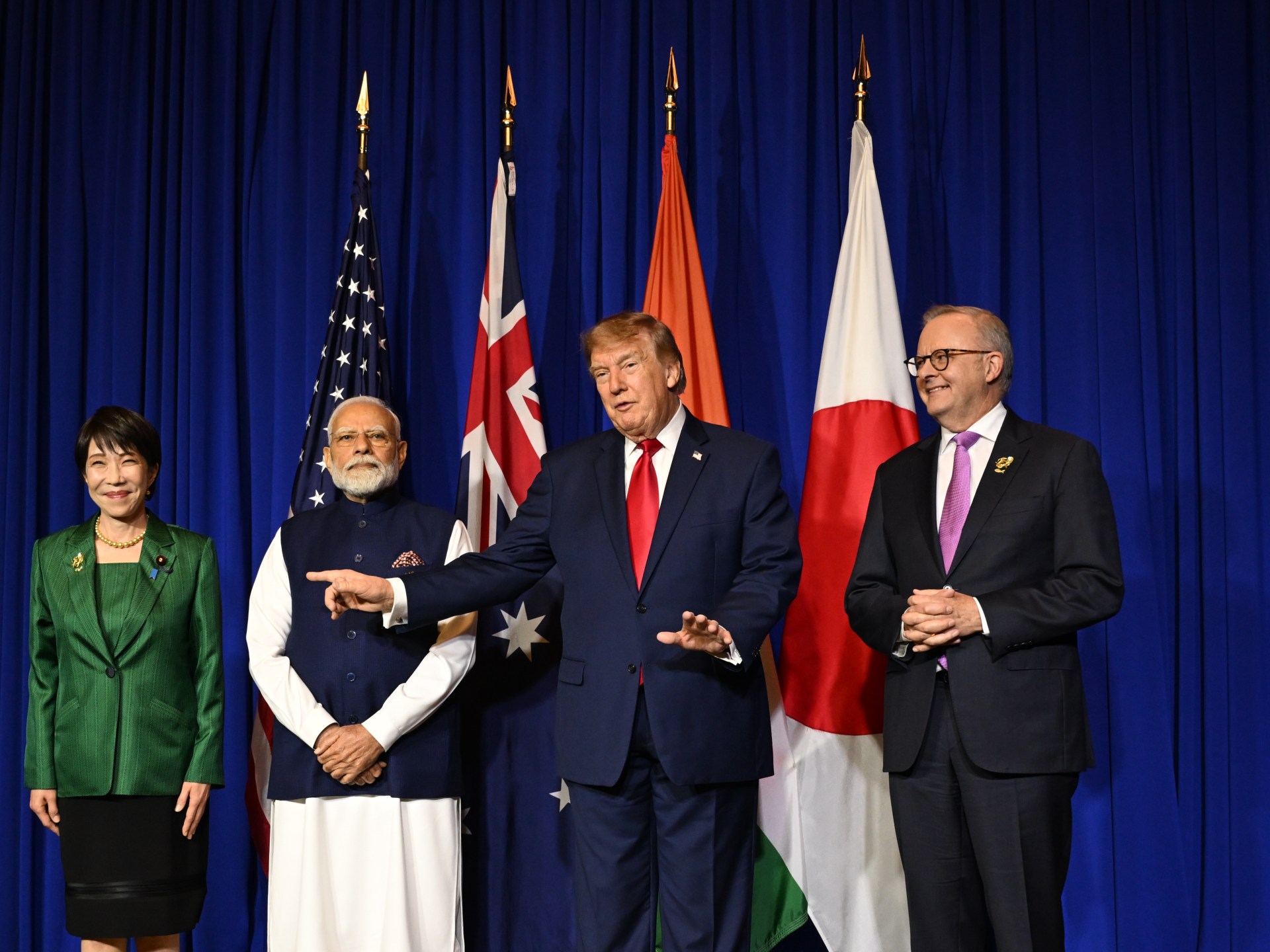
In a significant move to secure supply chains of critical minerals, the leaders of the United States, India, Australia, and Japan (Quad) have reached agreements during a meeting in Manila. The aim is to prevent coercion by any single foreign supplier, although China, the world's dominant player in rare earth supplies, was not explicitly mentioned. This strategic alliance, which aims to foster a free, open, stable, and prosperous Indo-Pacific region, is seen as a response to economic coercion practices such as arbitrary export restrictions that have been reportedly used by China on rare earths essential for manufacturing various high-tech products. The Quad leaders expressed grave concerns about these practices in their joint statement but did not name any country. While the meeting suggested a functioning relationship, it was noted that Trump's predecessor, US President Joe Biden, considered the Quad as a significant foreign policy initiative. The agreements on critical minerals are part of a broader effort to reduce dependence on China and bolster the Indo-Pacific economy.
At the Association of Southeast Asian Nations (ASEAN) summit in Manila, US President Donald Trump also discussed groundbreaking issues with regional leaders. Following his visit to the Philippines, he will travel to China and attend the Asia-Pacific Economic Cooperation (APEC) forum in Shenzhen, where a trilateral meeting with Russian President Vladimir Putin and Chinese President Xi Jinping is expected. The talks are reportedly focused on safeguarding world peace. In another development, Trump commented on allegations that Iran was developing plans to use a so-called "dirty bomb" against officials in the US, stating that he would take such a threat "very seriously." However, Iranian Foreign Ministry spokesperson Esmaeil Baghei denied these claims, asserting that they are fabricated media narratives.
In a pivotal move aimed at strengthening the Indo-Pacific region, the leaders of the United States, India, Australia, and Japan (Quad) have struck agreements on securing supply chains for critical minerals. These deals are designed to counter coercive tactics by any single foreign supplier, although China, which dominates global rare earth supplies, was not singled out. The Quad nations seek to create a free, open, stable, and prosperous Indo-Pacific region, with the agreements on critical minerals being part of a broader effort to reduce dependence on China and bolster economic resilience. The Quad leaders expressed concerns about economic coercion practices such as arbitrary export restrictions but did not name any country specifically.
During his visit to Manila, US President Donald Trump also attended the Association of Southeast Asian Nations (ASEAN) summit and discussed groundbreaking issues with regional leaders. Following his engagement in the Philippines, he will travel to China for the Asia-Pacific Economic Cooperation (APEC) forum in Shenzhen, where a trilateral meeting with Russian President Vladimir Putin and Chinese President Xi Jinping is scheduled. The talks are expected to focus on topics of "groundbreaking significance," including safeguarding world peace. Trump also addressed allegations that Iran was planning to use a so-called "dirty bomb" against US officials, stating that he would take such a threat seriously but expressing hope that Iran did not pose a danger. Iranian Foreign Ministry spokesperson Esmaeil Baghei denied these claims, characterizing them as fabricated media narratives.
The leaders of the United States, India, Australia, and Japan (Quad) have reached agreements on securing supply chains for critical minerals during a meeting in Manila. These deals aim to prevent coercion by any single foreign supplier and represent a strategic move to reduce dependence on China and bolster economic resilience in the Indo-Pacific region. While China, the world's dominant player in rare earth supplies, was not explicitly mentioned, the agreements are seen as a response to economic coercion practices such as arbitrary export restrictions that have been reportedly employed by China on rare earths essential for manufacturing various high-tech products. The Quad nations seek to create a free, open, stable, and prosperous Indo-Pacific region, with the agreements on critical minerals being part of this broader objective.
During his visit to Manila, US President Donald Trump also attended the Association of Southeast Asian Nations (ASEAN) summit and discussed groundbreaking issues with regional leaders. After his engagement in the Philippines, he will travel to China for the Asia-Pacific Economic Cooperation (APEC) forum in Shenzhen, where a trilateral meeting with Russian President Vladimir Putin and Chinese President Xi Jinping is scheduled. The talks are expected to focus on topics of "groundbreaking significance," including safeguarding world peace. Trump also addressed allegations that Iran was planning to use a so-called "dirty bomb" against US officials, stating that he would take such a threat seriously but expressing hope that Iran did not pose a danger. Iranian Foreign Ministry spokesperson Esmaeil Baghei denied these claims, characterizing them as fabricated media narratives.