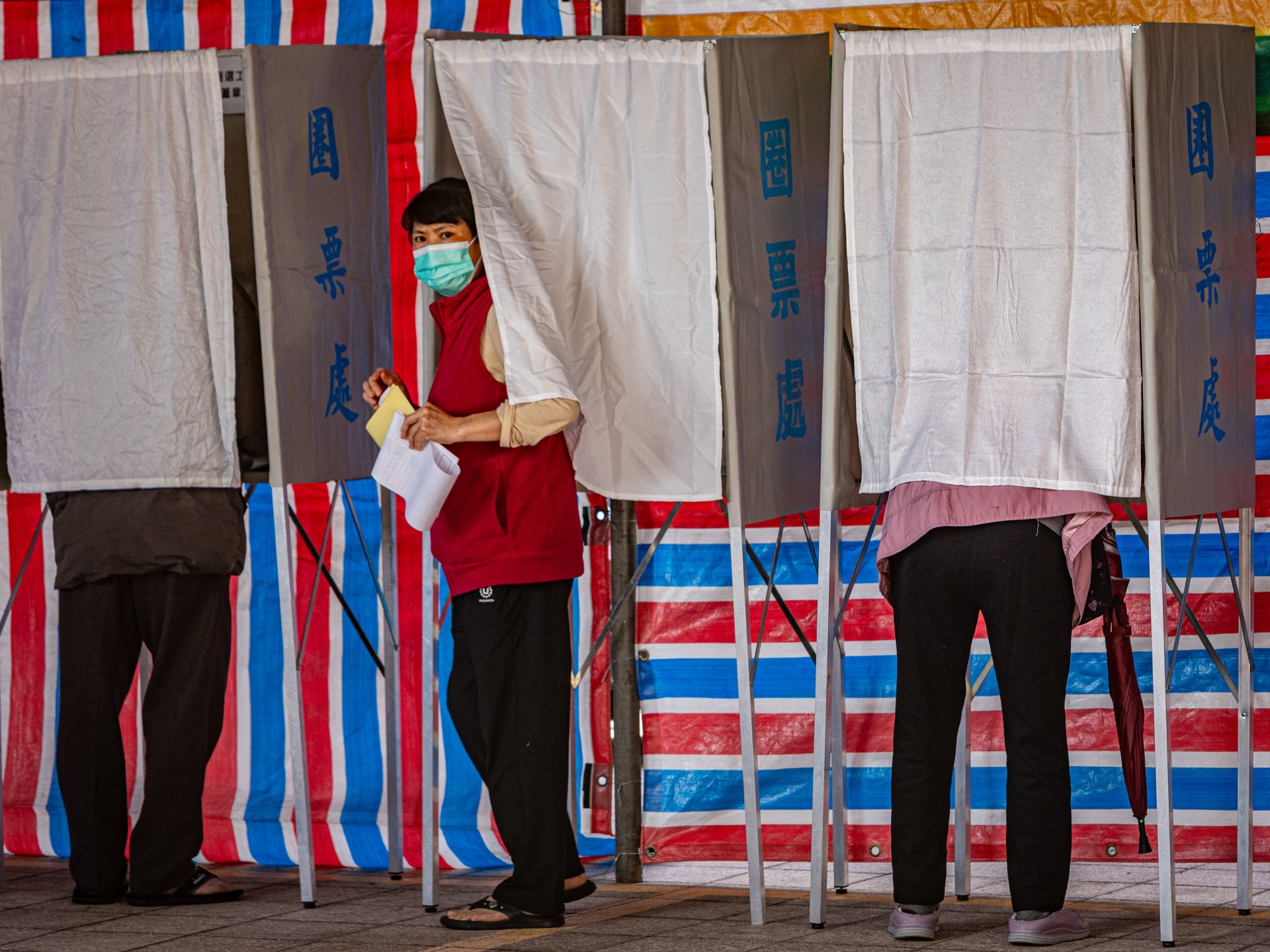
Taiwan held local elections on Saturday, with key races in Taipei and other major cities showcasing a competitive political landscape. The election, which saw over 11,000 positions at stake, was particularly significant for the mayoral race in Taipei, where academic-turned-lawmaker Puma Shen of the Democratic Progressive Party (DPP) challenged incumbent Mayor Chiang Wan-an of the Kuomintang (KMT). Shen's strong challenge in the KMT's traditional stronghold could signal a potential shift in Taiwanese politics, with implications that extend beyond its borders.
The race for Taipei's mayoral position is crucial as it has traditionally been a stronghold of the KMT, and Chiang Wan-an, who won by a double-digit margin in the last election, was seen as a potential future presidential candidate. However, Shen, an expert on China's information warfare, entered the race as the underdog but drew huge crowds at his rallies. The outcome of this race is being closely watched in Beijing, where Austin Wang, a political scientist at the University of Nevada, commented that a Shen victory could be seen as "quite shameful".
The elections in Taiwan are not directly linked to its China policy, and campaigns have primarily focused on local issues such as transport, childcare, and the environment. However, Beijing has repeatedly weighed in, with concerns over potential Chinese influence through "cognitive warfare" and "transnational repression". The Taiwanese Ministry of National Defense reported about 33 sorties from China's People's Liberation Army warplanes between Friday and Saturday flying towards Taiwan, including bombers and fighter jets.
The results of these elections may not directly impact the next presidential election, due in early 2028, but they could influence the KMT's presidential ticket discussions. Potential candidates include outgoing Taichung Mayor Lu Shiow-yen, parliamentary speaker Han Kuo-yu, and KMT chairwoman Cheng Li-wun, who met Chinese President Xi Jinping in April. A poor performance by the KMT could put pressure on Cheng to step down.
The global trend-spotting analysis suggests that these elections highlight the ongoing political tension between Taiwan and China, with the potential for shifts in power within Taiwan's political landscape impacting regional dynamics. As the world watches the results unfold, the implications extend far beyond Taipei, making this election a significant event on the global stage.