Global Analysis: Russia's Escalating Drone and Missile Assault on Kyiv Disrupts Oil Sector, Intensifying Conflict
In a dramatic overnight assault, Russia launched an 11-hour drone and missile attack on Kyiv, Ukraine's capital, resulting in at least 20 civilian casualties and injuring scores more.
By Global Trend Scope Desk
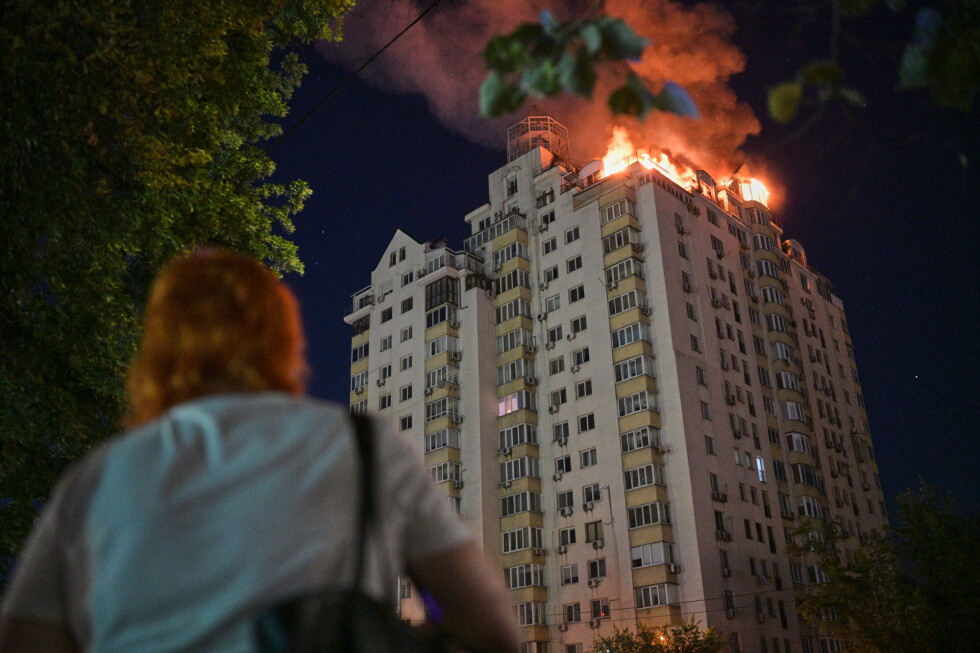
In a dramatic overnight assault, Russia launched an 11-hour drone and missile attack on Kyiv, Ukraine's capital, resulting in at least 20 civilian casualties and injuring scores more. The attack, according to Moscow, was retaliation for Ukrainian strikes on Russian oil facilities, which have caused severe fuel shortages and increased pressure on President Vladimir Putin. This latest escalation comes four years into the conflict, with Ukraine's technological advancements in drone engineering giving it an edge against Russia's military, as evidenced by targeted attacks on supply routes and infrastructure behind the front line. The Ukrainian government aims to force Putin to the negotiating table, but Moscow has so far responded with further bombardment. Diplomatic efforts to end the war have thus far proven fruitless, with Putin believing that time is on his side, and Western support will eventually wane. The attack caused damage in 30 locations across Kyiv, primarily residential buildings and civilian infrastructure, and triggered a fuel crisis in Crimea, the Black Sea peninsula illegally annexed by Russia in 2014. Meanwhile, in Ukraine's central Dnipropetrovsk region, a Russian guided bomb strike killed a 7-year-old girl and wounded four others. The conflict between these two nations continues to escalate, with global implications for geopolitical stability and energy security.
Filed underConflict
More stories
Conflict
Deadly Backpack Bombing Rattles Northern Spain, Prompting Wide-scale Manhunt
Global Trend Scope Desk
Conflict
DR Congo Court Imposes Death Sentences on Soldiers for Desertion and Mutiny
Global Trend Scope Desk
Conflict
Americans Shift Away from Pro-War Candidates, Prioritizing Economic Stability over Military Conflicts
Global Trend Scope Desk
Conflict
Global Energy Crisis Escalates as Saudi Arabia Intercepts Houthi Missiles Targeting Key Infrastructure
Global Trend Scope Desk
Conflict
House Resolution Introduced to Impeach Defense Secretary Hegseth Over Alleged Constitutional Violations
Global Trend Scope Desk
Conflict
US Agencies Collaborate to Enhance Counter-Drone Measures Globally
Global Trend Scope Desk