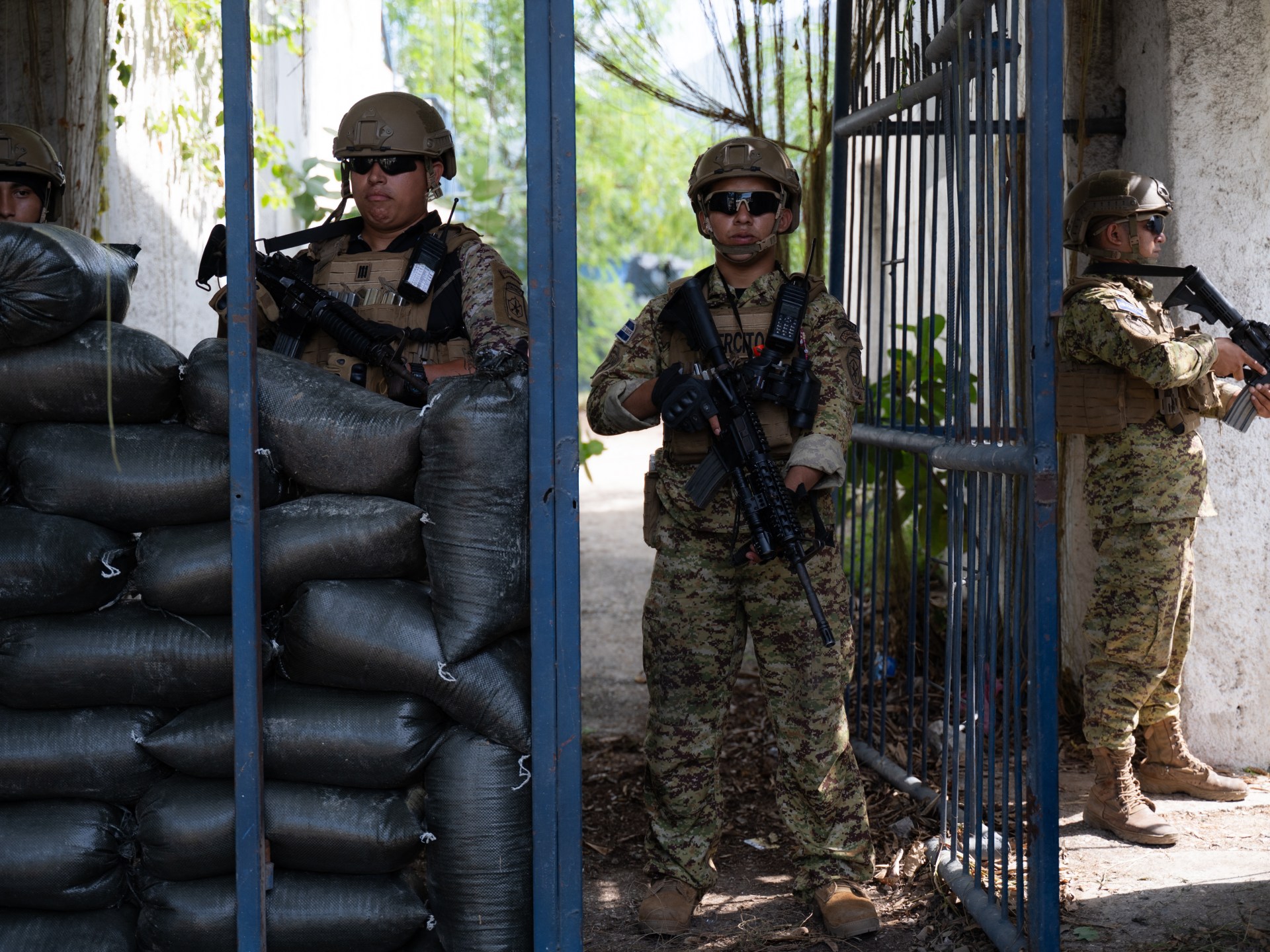
In a move that has sparked both support and controversy, El Salvador has dispatched approximately 2,500 troops to Haiti as part of an anti-gang operation. The decision was prompted by the kidnapping of four Salvadoran aviation technicians on October 18 near Port-au-Prince. Despite concerns about the potential instability this foreign intervention may cause in Haiti, demonstrators have taken to the streets in several cities across the Caribbean nation, voicing their support for El Salvador's deployment. Haiti has been grappling with escalating gang violence since the assassination of President Jovenel Moise in 2021, which further weakened the country's central government. The timeline for El Salvador's troop withdrawal is uncertain, with the leader of Haiti’s 400 Mawozo gang claiming that the technicians are already dead. Critics have voiced concerns about the potential backlash and increased instability such tactics could bring to Haiti, as well as the lack of long-term planning for El Salvador's troop deployment.
In a diplomatic gesture, Haitian Justice Minister Patrick Pelissier traveled to San Salvador on Monday to express gratitude for the troop surge. He stated that the Haitian people applauded President Nayib Bukele's decision and highlighted recent gains made by Haitian security forces in regaining control of the national football stadium, previously held by gangs. El Salvador has framed its deployment as a rescue mission, with President Bukele championing his country's role in confronting Haiti’s gangs on social media. However, concerns remain about the potential human rights abuses that could result from Bukele's heavy-handed approach, which has been widely condemned in El Salvador.
This latest intervention marks another chapter in the long history of international involvement in Haiti, a country that has seen multiple foreign troop deployments throughout the 20th century. The United States, for instance, occupied Haiti for decades and seized control of its central bank during the 20th century. More recently, a United Nations-backed Gang Suppression Force arrived in Haiti in April to help address the widespread gang violence. With over 80 percent of the capital region under gang control, the conflict has claimed more than 22,000 lives since 2022. The UN has reported hundreds of civilian deaths due to security operations, including the displacement of nearly 2,000 people since the arrival of Salvadoran troops. However, Haiti's government has not reported any civilian casualties in the latest operations, which have been described as professional by Haitian officials.