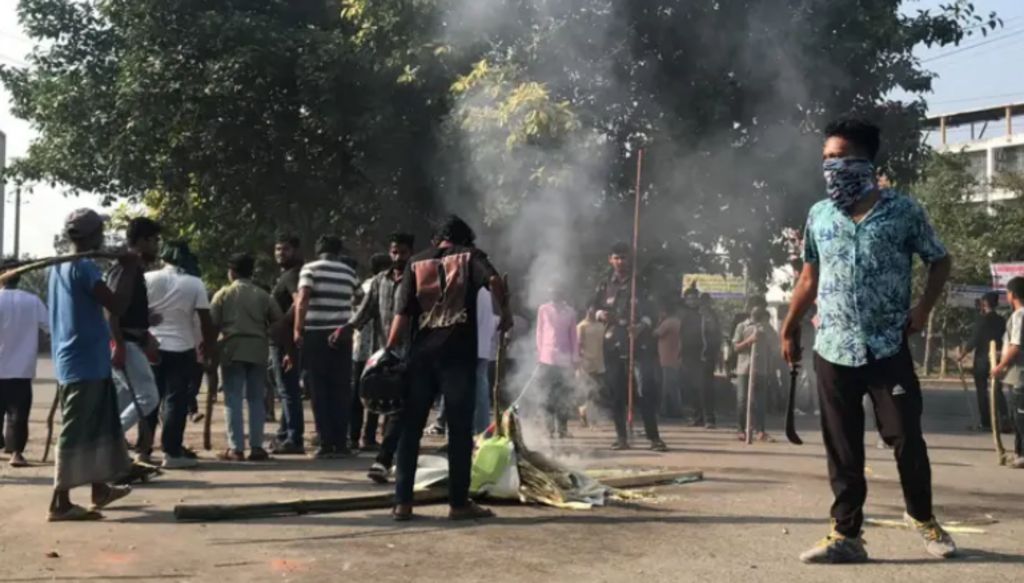
In recent developments, protests instigated by supporters of ousted Prime Minister Sheikh Hasina have erupted in Bangladesh, demanding her return from exile in India. These demonstrations, initiated after Hasina's public request for a passport to reenter the country, are viewed as the first major show of force since her removal in August 2024 following widespread uprisings against her rule.
The unrest has resulted in police using tear gas and rubber bullets to disperse protesters, with instances of violence escalating such as a 60-year-old driver being killed by smoke inhalation after his vehicle was set on fire. The student wing of Hasina's Awami League party, Bangladesh Chhatra League (BCL), has been at the forefront of these protests, causing disruptions to traffic and setting fire to vehicles across the country.
The Bangladeshi government, led by Home Minister Salahuddin Ahmed, has expressed concerns over any attempts to destabilize the country and maintains that protesters were not responsible for violent incidents. However, a senior leader of the BCL, now in exile, claims their protests are peaceful in nature. The Awami League party was banned shortly after Hasina's departure, and a special tribunal sentenced her to death in absentia for crimes against humanity.
Hasina fled to India two years ago amid allegations of jailing political rivals, suppressing dissent, and overseeing widespread human rights abuses. The United Nations estimated up to 1,400 people were killed during the anti-government protests in 2024. Despite facing a death penalty threat, Hasina expressed her desire to return to Bangladesh in December and requested a passport from the Bangladeshi High Commission in New Delhi. However, the Bangladeshi government has refused to issue a passport to her, labeling her a "terrorist." The country maintains an active extradition treaty with India, calling for Hasina's extradition.