In a significant move aimed at curbing Chinese access to advanced semiconductors, the U.S. administration has announced new interim rules that will increase scrutiny of data center operators in Singapore, Malaysia, Thailand, Indonesia, and Brazil. These regulations, effective immediately, not only restrict the export of advanced chips but also limit access to their computing power, a resource heavily relied upon by Chinese firms for training artificial intelligence models abroad.
The new rules come as President Donald Trump prepares for his visit to China, and they pose a fresh challenge for Beijing, which has become increasingly dependent on foreign compute due to U.S. export restrictions. According to research by the Institute for Progress, at least 30% of China's advanced AI computing power is projected to come from renting overseas or smuggling in 2027.
For Southeast Asian countries, this move could present problems, as they have invested heavily in data centers to support their AI ambitions. Some of these firms are accused of helping China evade U.S. export controls on advanced chips. The Singaporean data center firm Megaspeed, for instance, is suspected of being involved in illegally smuggling chips to Chinese companies after purchasing them for use in data centers in Malaysia, Indonesia, and Thailand.
The US Commerce Department's Bureau of Industry and Security has identified Brazil and the four Southeast Asian nations as presenting a higher-than-normal risk of diversion of the chips that Washington wants to keep out of China's hands. The new measures are designed to ensure sensitive U.S. technology "cannot be circumvented through remote computing arrangements involving data centers in third countries." Licenses will be issued on a "case-by-case basis."
Countries like Malaysia and Thailand, whose data center rollout has been heavily driven by Chinese buyers, could be hit hardest by these new rules. However, investment backed by major tech firms and clearly identifiable customers is expected to remain relatively resilient. Singapore, an early adopter of data centers, may find it harder to get hold of advanced chips now that it has limited new construction, leading investment to flow to neighbors Malaysia and Thailand.
Relevant authorities in Indonesia, Malaysia, and Thailand were reached out to for comment, while Singapore is engaging with relevant U.S. authorities to understand the new rules better and exploring how to facilitate trusted access for local firms. Brazil's Ministry of Development, Industry, Trade and Services is aware of the U.S. announcement and is closely monitoring any potential developments regarding this measure. Malaysia has previously stated it welcomes data center investment but will not allow itself to be used to get around export controls.
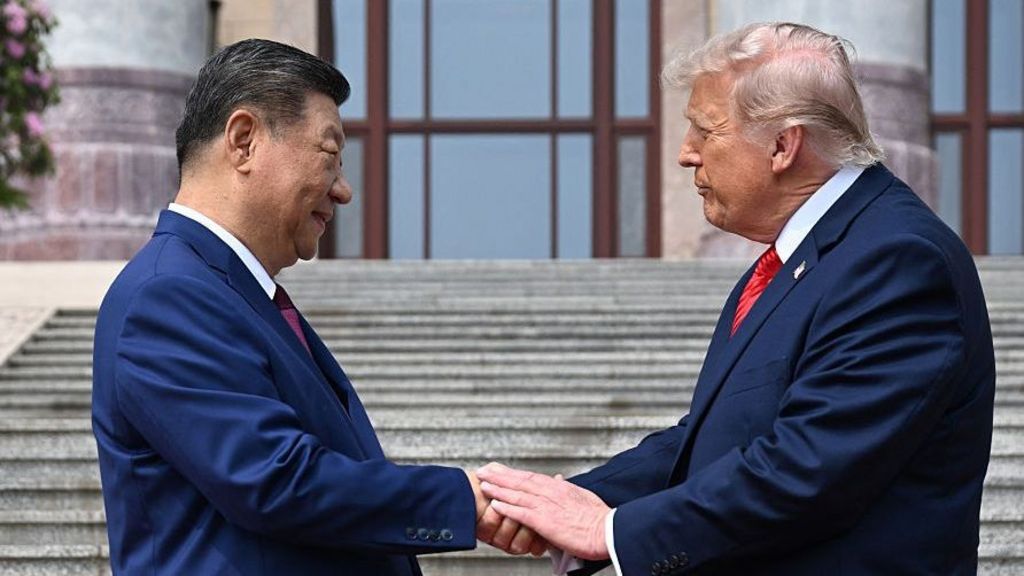
The new rules come just ahead of Trump's meeting with Chinese leader Xi Jinping in Shenzhen this week. With self-sufficiency in tech being a national priority for China, these restrictions could hinder Beijing's efforts to build powerful AI models and compete with U.S. rivals like Anthropic and OpenAI. Despite having significantly better compute access and financing, The Institute for Progress estimates top U.S. AI models lead the best Chinese platforms by only about six and a half months.