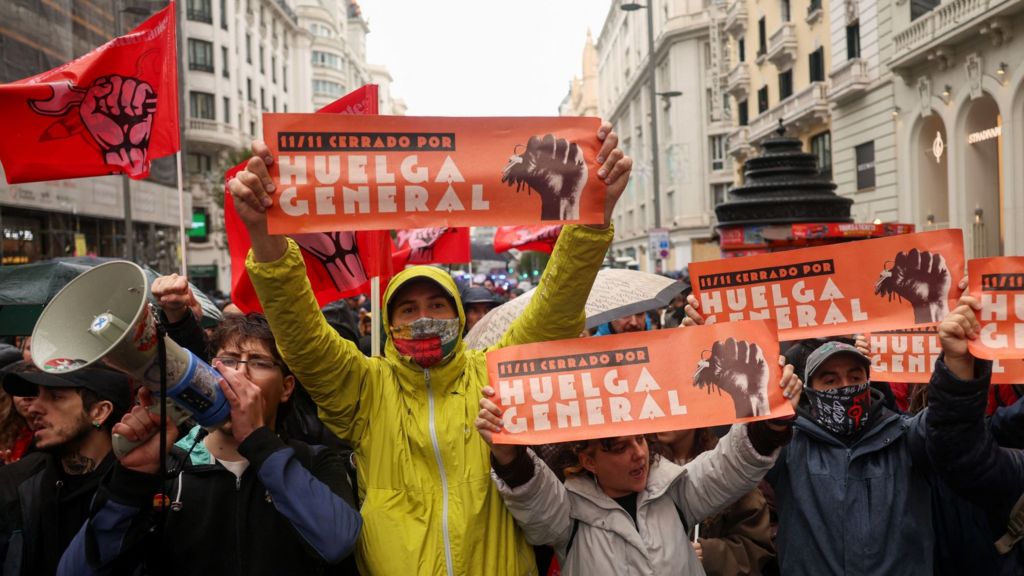
Spain experienced widespread disruption in its first general strike in 14 years on Wednesday, as workers across the nation demonstrated against rising living costs and the scarcity of affordable housing. The strike, organized by major unions, was reportedly met with "massive" participation according to UGT's head, Pepe Álvarez, while CC OO's Unai Sordo described turnout as "very significant." However, the Spanish Confederation of Business Organisations claimed that participation varied significantly across regions and sectors. The industrial hubs of Madrid and Catalonia were among the areas hit hardest by the strike, with traffic disruptions on major roads.
The protests were triggered by public outrage over the eviction of 87-year-old Maricarmen Abascal from a flat she had occupied for seven decades in Madrid, which led to her death in hospital weeks later. The high cost of housing, particularly in Madrid, has been a growing concern for many Spaniards, with the average monthly rent for a 50m² apartment standing at €1,170, almost half the average gross salary of about €2,460. Socialist Prime Minister Pedro Sánchez called snap elections last month after his housing reform plan was rejected by parliament.
The general strike has become a contentious issue in the upcoming elections on 29 November, with the conservative People's Party (PP) accusing the government of exploiting the strike for electoral gain. PP leader Alberto Núñez Feijóo labeled the unions as "mafia" and "trash," while Sánchez defended workers' right to strike. The PP currently leads in polls, with party spokesman Miguel Tellado suggesting that the government is using the strike to warn voters against a right-wing government taking power.
The strike saw participation from various sectors, including Gonzalo Álvarez, a 27-year-old sales worker who volunteers for a housing union. He expressed concern over the eviction of Maricarmen Abascal and the unaffordability of housing in Madrid, stating that it is "impossible" to buy a house with current wages. The vice-president of the CEOE, Miguel Garrido, criticized the strike, arguing that businesses have little control over housing prices. Demonstrations were planned for several cities later in the day, and the level of support could serve as an indicator of public discontent ahead of the election.