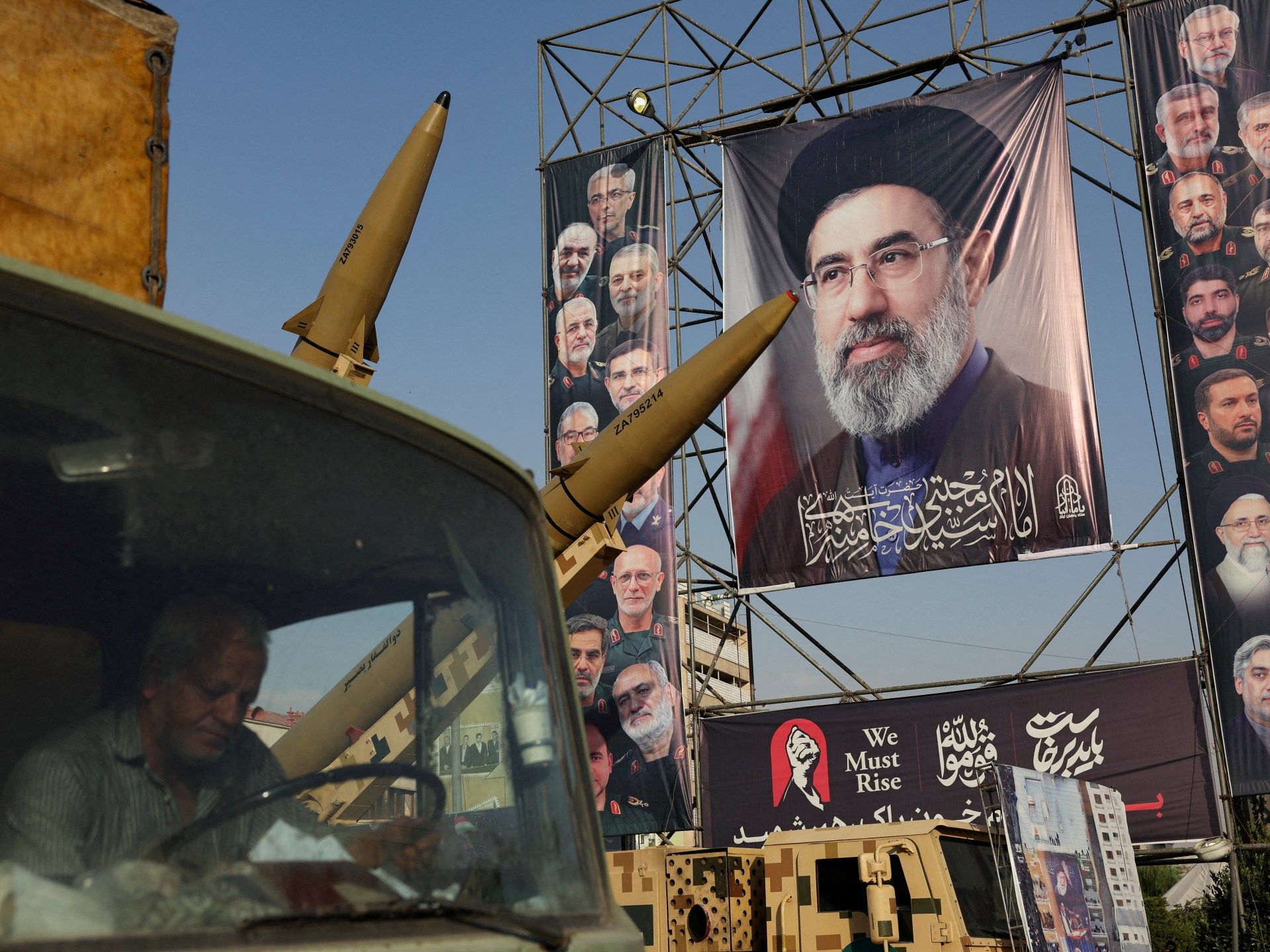
The Islamic Revolutionary Guard Corps (IRGC) of Iran announced on Saturday that it has lifted its self-imposed 2,000km limit on the range of its ballistic missiles. This move raises questions about whether Tehran now intends to target locations outside of the Middle East. The IRGC spokesman, Brigadier-General Hossein Mohebbi, declared at a news conference in Tehran that the range restriction has been eliminated.
While Mohebbi did not confirm if Iran already possesses missiles exceeding the limit, he stated that the country would demonstrate its capabilities through action rather than statements. The announcement comes after Supreme Leader Mojtaba Khamenei's warning that any threat from the United States or Israel would be met with a response unconstrained by geography. Iran is seeking to move away from the "no war, no peace" situation in the Strait of Hormuz and US naval blockade on its ports, as well as intensifying diplomatic efforts to end the US-Israel conflict.
The lifting of the limit does not significantly affect Gulf states, which are already within Iran's 2,000km range and have been targeted by Iranian missiles since the US and Israel initiated military actions in February. However, this development could enable Iran to position some of its rocket launchers in the country's east, potentially reaching Israel with a longer range. The US and its European allies are concerned about Iran's ability to target US bases in the Indian Ocean and Europe, as well as the possibility that technology from Iran's space program could be repurposed for intercontinental ballistic missiles.
In 2019, the UK accused Iran of firing missiles towards the joint US-UK base at Diego Garcia, located approximately 4,000km from Iran. Iran denied targeting the base and labelled it an "Israeli false flag" operation. Experts suggest that Iran has the capacity to reach anywhere in the world with its space launch rockets, but the effectiveness of such attacks is uncertain.
The IRGC's announcement seems to signify a shift from Tehran's assurances to Europe regarding missile range, as tensions between Iran and Europe have escalated over concerns about Iran's nuclear program and regional geopolitical ambitions. The European Union has designated the IRGC as a "terrorist" group and allowed US access to bases on the continent, which has drawn criticism from Iran. Iran has repeatedly warned Bulgaria over US aircraft on its soil and cautioned against hosting US military aircraft for operations against Iran.
In response to Bulgaria's parliament approving up to eight US KC-135 refuelling tankers at Bezmer airbase in July, the Iranian Ministry of Foreign Affairs spokesperson Esmaeil Baghaei stated that Bulgarian decision-makers "must bear responsibility" for the move. This is the third warning issued by Tehran to Sofia since August, when two Iranian insiders told the Financial Times that Iran was considering military retaliation against Bulgaria.