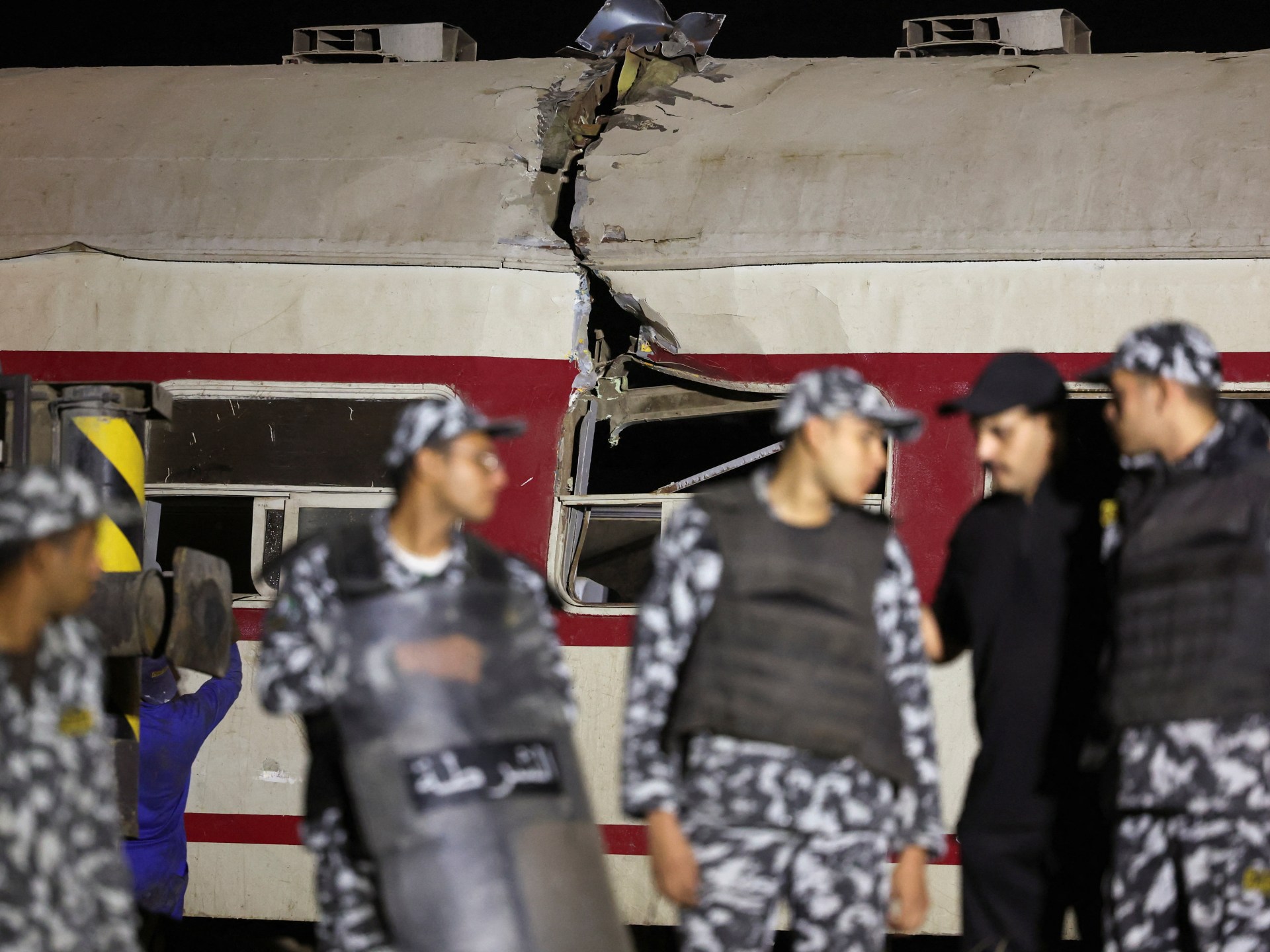
A fatal train collision in al-Ayyat, Egypt, that claimed at least seven lives and injured over 125 individuals has sparked a wave of demands for accountability and rail safety reviews. The incident, which occurred on the outskirts of Cairo, has raised questions about the effectiveness of the millions of dollars invested by the Egyptian government in upgrading the railway network, with concerns that these investments may not be translating into enhanced passenger safety.
The disaster occurred when a train travelling between Giza and Fayoum collided with another train on the Cairo-to-Aswan route, causing the latter to derail onto a countryside road in al-Ayyat district. In response, President Abdel Fattah el-Sisi ordered an immediate investigation to hold accountable any parties found negligent, while the Egyptian parliament's Transport and Communications Committee summoned Transport Minister Kamel el-Wazir for an emergency session.
Opposition voices have escalated demands for political accountability, ranging from criticizing the minister to calling for the dismissal of the entire government. Critics point to a history of railway disasters in al-Ayyat, including a 2002 fire that killed over 370 people and a train collision in 2009 that claimed 15 lives. They argue that the recurrence of accidents in the area, despite assurances from the Transport Ministry about railway system development, indicates a lack of genuine accountability among officials responsible for these incidents.
Politicians such as Abdel Moneim Imam, head of the Justice Party, have called for ministers to be questioned in Parliament over the latest accident and have criticized the parliamentary majority's protection of the Transport Minister. Some argue that replacing the transport minister would not address the broader systemic issues contributing to these accidents, and instead call for a change in government policies.
As scrutiny mounts, Egypt's parliamentary transport committee is convening to discuss the circumstances surrounding Sunday's train collision and measures to prevent similar incidents. However, questions remain about railway funding, with some politicians calling for a detailed breakdown of how loans obtained by the Transport Ministry have been spent. The ongoing rail safety crisis in Egypt underscores the need for comprehensive reform and accountability across the government, not just within the transport sector.