Global Community Urged to Act as Rohingya Refugees Demand Justice and Safe Repatriation Amidst Humanitarian Crisis in Bangladesh
On the ninth anniversary of their exodus from Myanmar, over 1.2 million Rohingya refugees staged a mass protest at the world's largest refugee settlement in Cox's Bazar, Bangladesh.
By Global Trend Scope Desk
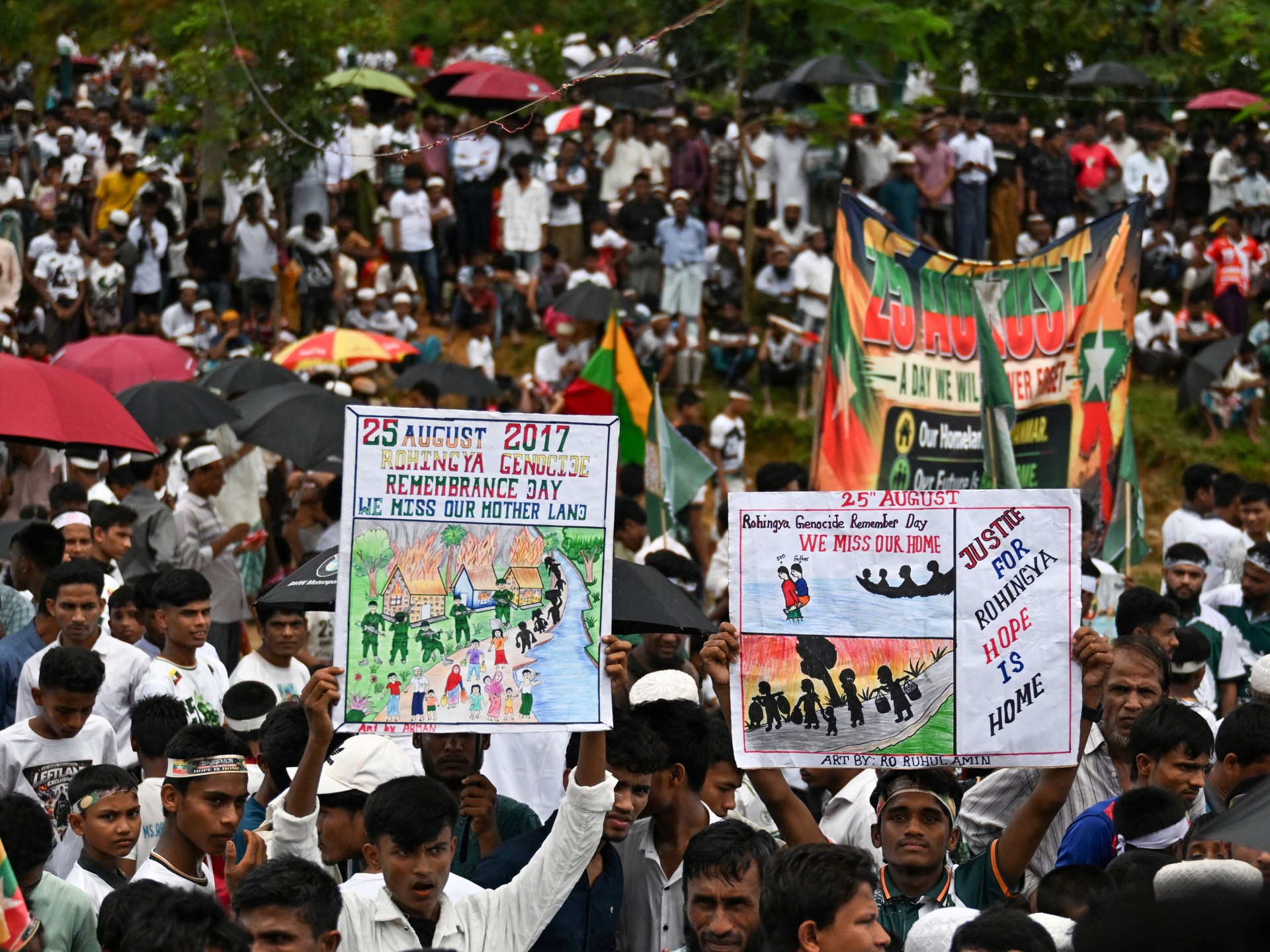
On the ninth anniversary of their exodus from Myanmar, over 1.2 million Rohingya refugees staged a mass protest at the world's largest refugee settlement in Cox's Bazar, Bangladesh. The demonstration, led by the United Council of Rohingya refugee group, aimed to draw attention to the ongoing humanitarian crisis and remember the atrocities committed during their forced displacement. Conditions within the overcrowded camps have deteriorated due to funding reductions, limited rations, and cuts in services, making essential services increasingly scarce. The aid organization Oxfam warns that reduced humanitarian resources could undo any progress made in Cox's Bazar. In addition to demanding justice and dignity, the protesters called for international assistance to improve their living conditions and a safe return to their homeland. According to Save the Children, one in three Rohingya refugees faces crisis hunger levels or worse between September and December. Bangladeshi authorities have expressed their concern about being overstretched and have urged the dignified repatriation of the Rohingya to Myanmar. However, conditions in Myanmar do not currently allow for safe repatriation, as conflict escalates, airstrikes target civilian infrastructure, and humanitarian access is restricted by the Myanmar authorities' blockades. A joint statement from 16 diplomatic missions, including those of the European Union, the United Kingdom, and Canada, emphasized that Rohingya refugees have the right to return to their homes in Myanmar but stressed that current circumstances make this impossible. UN Secretary-General Antonio Guterres called for renewed global attention and action on behalf of the Rohingya people who face deepening insecurity, shrinking protection space, and diminishing prospects for durable solutions due to funding cuts affecting life-saving assistance.
Filed underWorld
More stories
World
Oxford Returns Ancestral Naga Remains to India, Paving Way for Joint Memorial and Burial
Global Trend Scope Desk
World
The Odyssey's Global Journey Grounded: Singapore Seizes Stranded Cruise Ship Amidst Fuel Cost Crisis
Global Trend Scope Desk
World
Global Energy Superpowers Battle for Dominance: Implications on Climate and Consumer Costs
Global Trend Scope Desk
World
Honduras Delays Verdict in Sex-Trafficking Case Amidst Global Concerns Over Impunity
Global Trend Scope Desk
World
Global Diplomacy Intensifies: US Mediates Russia-Ukraine Peace Talks Amid Claims of Battlefield Successes
Global Trend Scope Desk
World
European Diplomats Advocate for Inclusion in Russia-Ukraine Peace Negotiations
Global Trend Scope Desk