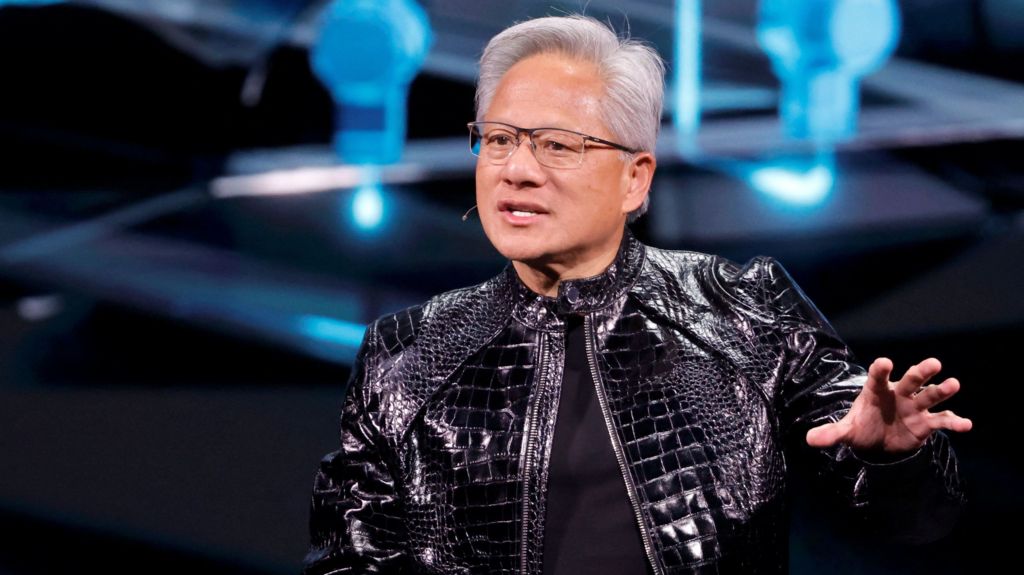
Jensen Huang, the charismatic CEO of Nvidia, who bears a striking resemblance to the late Steve Jobs, finds himself at the heart of a global race for Artificial Intelligence (AI) supremacy. In September last year, during US President Donald Trump's state visit to the UK, Huang advocated for lifting export bans on AI chips to China, specifically the H200 model. He was one of the few individuals who could meet with both Trump and Chinese President Xi Jinping within a short span, claiming success in persuading Trump regarding the matter.
However, Huang's assertions about the non-zero-sum nature of the AI race have been met with skepticism by national security circles. They argue that the advancement in AI is a zero-sum game, and the West, particularly the US, needs to take decisive action to prevent Chinese advancements. The nation possessing the most powerful AI systems, built on the most advanced microchips, would gain an edge in scientific development, encryption cracking, economic growth, and cyber-weapons.
In a bold move, Huang argued that it was beneficial for the US if the world, including China, became dependent on US technology, with Nvidia chips at its core. He further contended that President Trump recognized AI computing technology as not posing a national security concern. Huang's public arguments for lifting export bans during a period of alleged Chinese espionage investigation underscore his confidence in the US tech industry's position in the global AI race. Despite the recent 4% drop in Nvidia's value, the company remains a significant player with hard revenues of about $400bn this year and a market capitalization exceeding $4 trillion.
Jensen Huang, CEO of Nvidia, who shares a striking resemblance with Steve Jobs, is at the forefront of the global competition for AI dominance. During US President Donald Trump's visit to the UK last September, Huang lobbied for the lifting of export bans on AI chips to China, particularly the H200 model. He believed he had successfully convinced Trump of his case, a claim that has been met with mixed reactions.
In contrast to some views in national security circles, Huang maintains that the race for AI advancements is not zero-sum and requires no aggressive action from the West to halt Chinese progress. Instead, he suggested that it would be advantageous for the US if the world, including China, became reliant on US technology, with Nvidia chips at its core.
Despite ongoing investigations into alleged Chinese espionage, Huang publicly advocated for lifting export bans and downplayed concerns about his technology's potential national security implications. As the epicenter of the AI tech boom in the US, Nvidia continues to thrive with hard revenues of approximately $400bn this year and a market capitalization worth over $4 trillion.
Jensen Huang, the charismatic CEO of Nvidia, who bears a striking resemblance to Steve Jobs, is at the heart of the global race for Artificial Intelligence (AI) supremacy. During US President Donald Trump's state visit to the UK last September, Huang pushed for the lifting of export bans on AI chips to China, particularly the H200 model, claiming success in persuading Trump.
However, Huang's assertions about the non-zero-sum nature of the AI race have been met with skepticism by national security circles. They argue that the West, particularly the US, needs to take decisive action to prevent Chinese advancements. In contrast, Huang advocated for the US benefit if the world, including China, became dependent on US technology, with Nvidia chips at its core.
Despite ongoing investigations into alleged Chinese espionage, Huang publicly argued against national security concerns about his technology. As the epicenter of the AI tech boom in the US, Nvidia continues to thrive with hard revenues of approximately $400bn this year and a market capitalization worth over $4 trillion.