Emerging Middle Eastern Security Architecture: Saudi Arabia, Pakistan, and Turkiye Form Trilateral Pact Amidst Regional Shifts
A significant shift in regional security dynamics is unfolding as Saudi Arabia, Pakistan, and Turkiye have announced a mutual defense pact.
By Global Trend Scope Desk
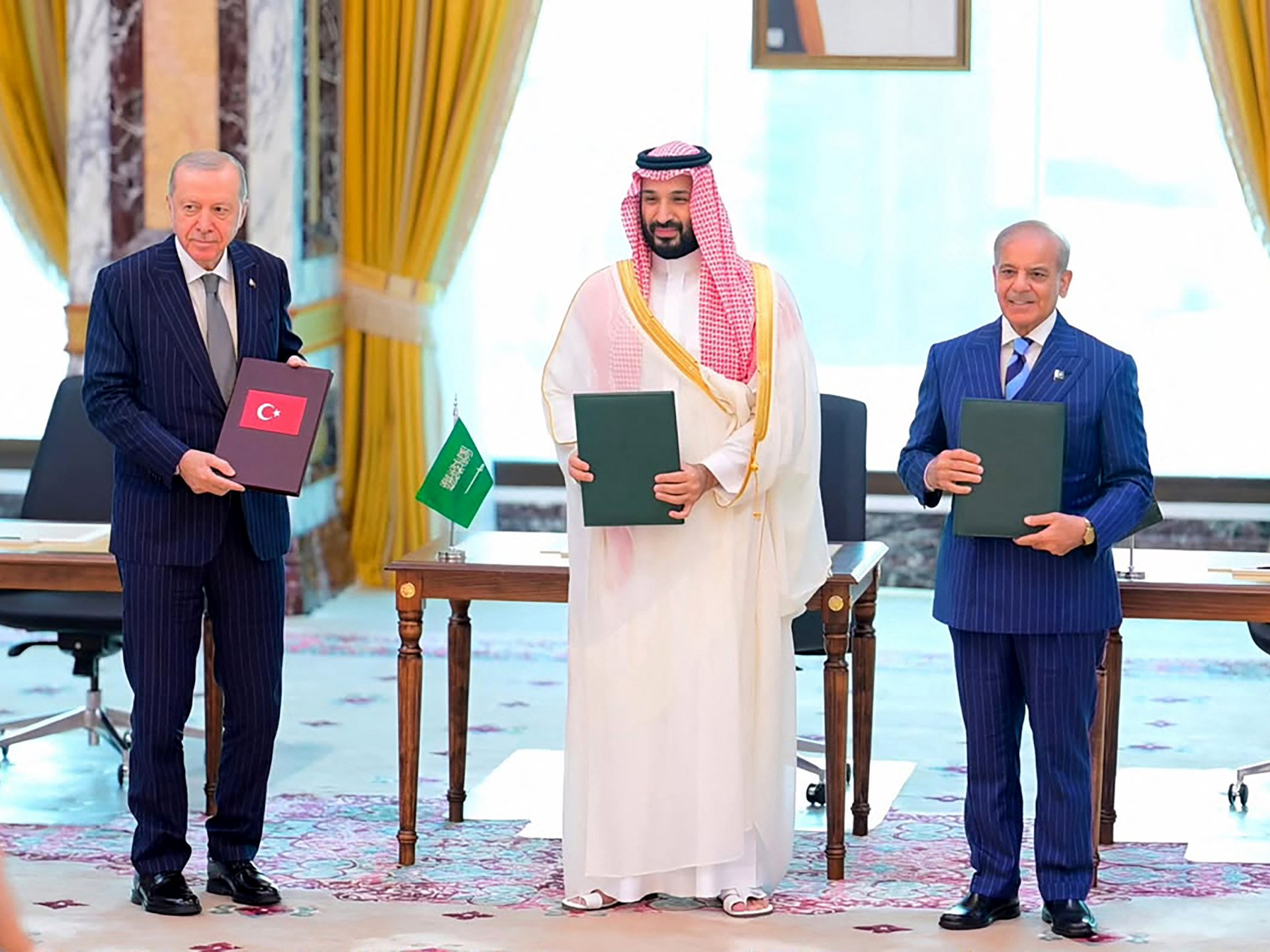
A significant shift in regional security dynamics is unfolding as Saudi Arabia, Pakistan, and Turkiye have announced a mutual defense pact. The agreement, signed in Mecca, expands upon existing alliances and promises collective action against external armed attacks on any of the three nations. This trilateral cooperation comes amidst ongoing tensions between the US and Iran, with no final deal yet reached to end their conflict. Although the immediate threat to Iran is not apparent, analysts such as Hamidreza Azizi suggest that Tehran may have reasons for concern in the long run. The agreement's timing, following months of conflict involving Saudi Arabia and Iran-aligned groups, could potentially strengthen Saudi deterrence and facilitate coordinated pressure on Iran in Yemen, Iraq, and economically through Turkiye and Pakistan. Iran's Foreign Minister Abbas Araghchi has emphasized the importance of Muslim cooperation and a diminishing US role, while officials have maintained that the pact is not targeted against any specific country. The agreement represents a potential beginning of the collapse of US security hegemony in West Asia and Persian Gulf, according to Hossein Noushabadi, a director general for parliamentary and legal affairs at Iran's Ministry of Foreign Affairs. Experts like Vali Nasr see this pact as elements of a post-American security order in the Middle East, offering a balance to the Abraham Accords and not currently posing an immediate threat to Tehran. Meanwhile, decision-makers in Iran maintain cordial relations with both Pakistan and Turkiye, viewing the agreement within the context of a diminishing direct US presence in the region. This trilateral pact, while symbolically significant, may signal a new regional security order based on cooperation among regional states, potentially marking the end of the prevailing security and geopolitical paradigm in West Asia.
Filed underWorld
More stories
World
Oxford Returns Ancestral Naga Remains to India, Paving Way for Joint Memorial and Burial
Global Trend Scope Desk
World
The Odyssey's Global Journey Grounded: Singapore Seizes Stranded Cruise Ship Amidst Fuel Cost Crisis
Global Trend Scope Desk
World
Global Energy Superpowers Battle for Dominance: Implications on Climate and Consumer Costs
Global Trend Scope Desk
World
Honduras Delays Verdict in Sex-Trafficking Case Amidst Global Concerns Over Impunity
Global Trend Scope Desk
World
Global Diplomacy Intensifies: US Mediates Russia-Ukraine Peace Talks Amid Claims of Battlefield Successes
Global Trend Scope Desk
World
European Diplomats Advocate for Inclusion in Russia-Ukraine Peace Negotiations
Global Trend Scope Desk